English
 Español
 tiếng việt
 русский
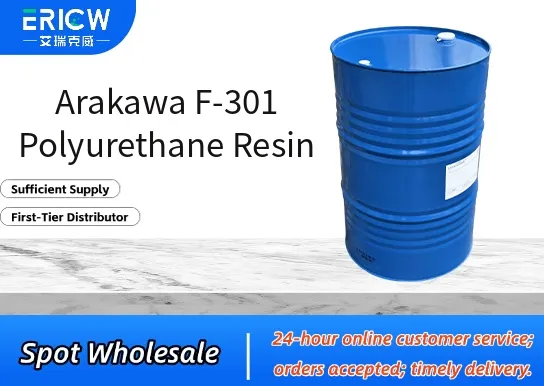
Excellent flexibility and impact resistance at low temperatures.
Superior adhesion to diverse substrates including metals, plastics, and composites.
Fast room-temperature cure profile with adjustable pot life for process optimization.
Low VOC content compliant with stringent industrial environmental regulations.
Good chemical resistance to oils, solvents, and mild alkaline solutions.
Automotive underbody coatings and chassis protection systems.
Industrial elastomeric sealants for machinery and equipment enclosures.
Protective coatings for offshore and marine infrastructure components.
Flexible encapsulants for electronic control units (ECUs) and sensor housings.
Adhesive binders in high-performance composite laminates.
| Chemical Type | Aromatic polyurethane pre-polymer system |
| Product Form | Two-component liquid resin (Part A: pre-polymer; Part B: amine-terminated curative) |
| Appearance | Part A: amber viscous liquid; Part B: pale yellow low-viscosity liquid |
| Primary Applications | Protective coatings, structural adhesives, and flexible encapsulation |
| Key Features | Low-temperature flexibility, rapid cure, substrate versatility |
| Benefits | Reduced energy consumption during curing, extended service life in dynamic environments |
| Storage Stability | 12 months at 5–25°C (unopened, dry conditions) |
| Compliance | REACH registered; RoHS compliant; no added phthalates or heavy metals |
Q1: What is the primary function of Arakawa F-301 in polyurethane formulations?
A: Arakawa F-301 is a specialty polyurethane resin designed to enhance film formation, flexibility, and substrate adhesion—particularly in solvent-based and high-solids PU coatings and adhesives. It functions as a reactive binder or modifier that contributes to improved mechanical durability and chemical resistance without compromising processing stability.
Q2: Is Arakawa F-301 compatible with aromatic and aliphatic isocyanate systems?
A: Yes, Arakawa F-301 exhibits broad compatibility with both aromatic (e.g., TDI, MDI) and aliphatic (e.g., HDI, IPDI) isocyanates. Its molecular design supports consistent reactivity and phase integration across common PU crosslinking systems, making it suitable for both indoor and outdoor applications where UV stability or cure speed may vary.
Q3: How should Arakawa F-301 be stored and handled to maintain performance?
A: Store in tightly sealed containers under dry, cool conditions (preferably below 30 °C) and protect from moisture, direct sunlight, and prolonged exposure to air. As a moisture-sensitive polyol-containing resin, uncontrolled humidity can lead to viscosity increase or gelation over time. Always use clean, dry equipment during handling and avoid contamination with catalysts or acidic residues.
Q4: Can Arakawa F-301 be used in low-VOC or high-solids coating systems?
A: Yes—it is formulated to support high-solids PU systems and can be integrated into low-VOC formulations when paired with appropriate solvents and co-resins. Its relatively low volatile content and favorable rheology allow formulators to reduce solvent demand while maintaining sprayability and film integrity.
Contact With Us:
E-mail: wangxingqiang@ericwchem.com
Have a Questions? Call Us:
Add:
Building A1, Jiete Industrial Park, Huangpu District, Guangzhou City, Guangdong Province, China