English
 Español
 tiếng việt
 русский
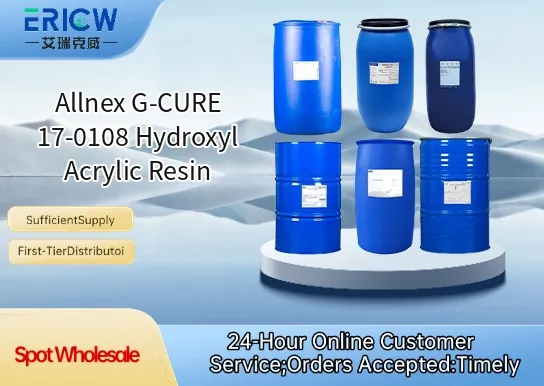
High hydroxyl functionality for efficient crosslinking with melamine and polyisocyanate curing agents.
Excellent compatibility with common solvent-based and high-solids coating systems.
Superior weatherability and UV resistance, supporting long-term gloss and color retention.
Good flow and leveling characteristics for smooth, defect-free film formation.
Designed for low-VOC formulations without compromising cure speed or mechanical performance.
Automotive OEM topcoats and clearcoats.
Industrial maintenance coatings for metal substrates.
General-purpose coil coatings requiring durability and flexibility.
Powder coating hybrid systems (liquid-acrylic/powder-binder blends).
High-performance refinish coatings for automotive and heavy equipment.
| Chemical Type | Hydroxyl-functional acrylic copolymer |
| Product Form | Liquid resin in organic solvent |
| Appearance | Clear, pale yellow to colorless liquid |
| Hydroxyl Value (mg KOH/g) | 65–75 |
| Solids Content (wt%, ISO 3251) | 55–60% |
| Viscosity (mPa·s, 25°C, DIN 53211) | 400–800 |
| Acid Value (mg KOH/g) | < 5 |
| Primary Applications | Thermosetting automotive and industrial coatings |
Q1: What is the primary function of G-CURE 17-0108 in UV-curable coatings?
A: G-CURE 17-0108 serves as a hydroxyl-functional acrylic oligomer that enhances crosslink density and film performance in hybrid UV/thermal or UV-only curing systems. It contributes improved hardness, chemical resistance, and adhesion—particularly when paired with multifunctional acrylates and appropriate photoinitiators.
Q2: Is G-CURE 17-0108 compatible with conventional free-radical UV monomers and oligomers?
A: Yes—it exhibits good compatibility with common acrylate monomers (e.g., TMPTA, HDDA) and oligomers, including urethane and epoxy acrylates. Its hydroxyl functionality also allows for potential incorporation into cationic or hybrid cure mechanisms when formulated with suitable co-reactants and catalysts.
Q3: How should G-CURE 17-0108 be stored to maintain stability?
A: Store in tightly sealed containers under inert atmosphere (e.g., nitrogen), protected from moisture, light, and elevated temperatures. Prolonged exposure to humidity or ambient air may lead to viscosity increase or premature reactivity due to its hydroxyl content.
Q4: Can G-CURE 17-0108 be used in low-VOC or high-solids UV formulations?
A: Yes—it is well-suited for high-solids and low-VOC UV coating systems due to its relatively low volatility and absence of reactive diluents requiring solvent stripping. Its molecular design supports formulation flexibility without compromising cure speed or final film integrity.
Contact With Us:
E-mail: wangxingqiang@ericwchem.com
Have a Questions? Call Us:
Add:
Building A1, Jiete Industrial Park, Huangpu District, Guangzhou City, Guangdong Province, China