English
 Español
 tiếng việt
 русский
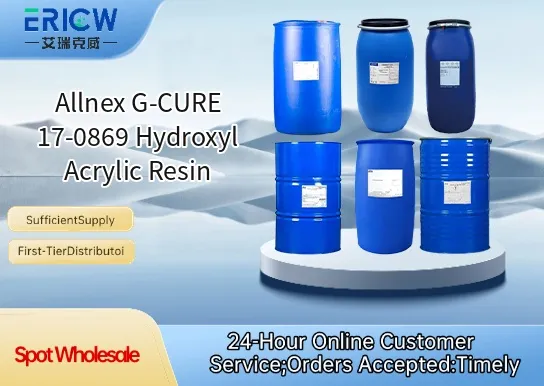
High hydroxyl functionality for efficient crosslinking with melamine and polyisocyanate curing agents.
Excellent compatibility with common solvent-based coating systems and low-VOC formulations.
Superior gloss retention and UV resistance in exterior topcoat applications.
Good flow and leveling characteristics for high-quality film formation.
Consistent batch-to-batch reproducibility meeting stringent Allnex quality control standards.
Automotive OEM clearcoats and basecoats.
Industrial maintenance coatings for metal substrates.
General-purpose coil coatings requiring durability and weatherability.
High-performance plastic coatings for automotive interior trim.
Powder coating hybrid systems (liquid-spray pre-treatment or co-resin).
| Chemical Type | Hydroxyl-functional acrylic copolymer |
| Product Form | Liquid resin in aromatic and aliphatic solvent blend |
| Appearance | Clear, pale yellow to colorless liquid |
| Hydroxyl Value (mg KOH/g) | 75–85 |
| Acid Value (mg KOH/g) | < 5 |
| Solids Content (% w/w) | 60 ± 2 |
| Viscosity (DIN 4, 23°C, mPa·s) | 4,000–6,000 |
| Primary Applications | Two-component (2K) polyurethane and melamine-cured coatings |
Q1: What is the primary function of G-CURE 17-0869 in coating formulations?
A: G-CURE 17-0869 is a hydroxyl-functional acrylic resin designed to serve as a reactive binder in thermosetting systems—particularly those cured with melamine, polyisocyanate, or other crosslinkers—providing enhanced hardness, chemical resistance, and gloss retention after cure.
Q2: Is G-CURE 17-0869 compatible with common industrial crosslinkers?
A: Yes, it exhibits good compatibility and reactivity with standard amino resins (e.g., high- and low-methylated melamines) and aliphatic polyisocyanates, enabling flexible formulation for baking enamels, coil coatings, and automotive refinish applications.
Q3: How does G-CURE 17-0869 contribute to film formation and curing performance?
A: Its well-balanced molecular weight and hydroxyl functionality support excellent flow and leveling during application, while enabling efficient crosslinking at typical baking temperatures (120–180 °C), resulting in rapid development of mechanical strength and solvent resistance.
Q4: Can G-CURE 17-0869 be used in low-VOC or high-solids systems?
A: Yes—it is formulated to perform effectively in medium-to-high solids solventborne systems and can be adapted for low-VOC formulations when combined with appropriate solvents and reactive diluents, supporting compliance with evolving environmental regulations.
Contact With Us:
E-mail: wangxingqiang@ericwchem.com
Have a Questions? Call Us:
Add:
Building A1, Jiete Industrial Park, Huangpu District, Guangzhou City, Guangdong Province, China