English
 Español
 tiếng việt
 русский
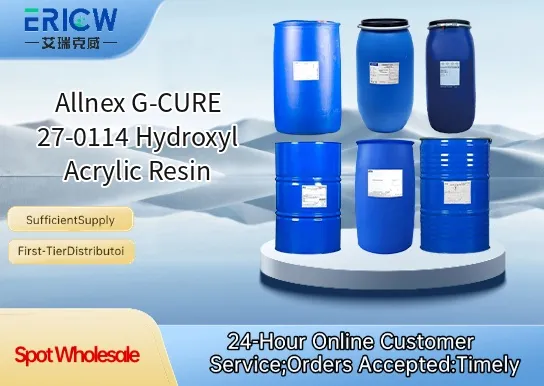
High hydroxyl functionality for efficient crosslinking with melamine and polyisocyanate curing agents.
Excellent compatibility with common solvent-based coating systems and low-VOC formulations.
Superior gloss retention and weather resistance in cured film applications.
Good flow and leveling characteristics for high-quality finish appearance.
Consistent batch-to-batch reproducibility meeting stringent industrial quality control standards.
Automotive OEM and refinish topcoats.
Industrial maintenance coatings for metal substrates.
General-purpose coil coatings requiring durable, glossy finishes.
High-performance appliance coatings (e.g., refrigerators, washing machines).
Precision-engineered plastic coatings requiring adhesion and flexibility.
| Chemical Type | Hydroxyl-functional acrylic copolymer |
| Product Form | Liquid resin solution |
| Appearance | Clear to slightly hazy, pale yellow liquid |
| Primary Applications | Thermoset coatings requiring hydroxyl crosslinking |
| Key Features | High OH value, good solubility in aromatic & ester solvents |
| Benefits | Enables fast cure, excellent hardness-flexibility balance, UV stability |
| Solvent System | Typically xylene/butyl acetate or proprietary low-HAPs blends |
| Storage Stability | ≥12 months at 25°C in sealed container |
Q1: What is the primary function of G-CURE 27-0114 in coating formulations?
A: G-CURE 27-0114 is a hydroxyl-functional acrylic resin designed to serve as a reactive binder in thermosetting systems. It provides hydroxyl groups for crosslinking with common curing agents such as melamine formaldehyde, urea-formaldehyde, or polyisocyanates, contributing to film hardness, chemical resistance, and gloss retention after cure.
Q2: Is G-CURE 27-0114 compatible with UV-curable systems?
A: While G-CURE 27-0114 is primarily formulated for thermal cure applications, it may be incorporated into hybrid UV/thermal systems where hydroxyl functionality supports post-UV thermal crosslinking. However, it is not inherently photosensitive and requires a suitable thermal co-reactant and catalyst to achieve full network development.
Q3: How does G-CURE 27-0114 compare to polyester-based hydroxyl resins in terms of weatherability and yellowing resistance?
A: As an acrylic resin, G-CURE 27-0114 generally offers superior UV stability and lower tendency to yellow upon exposure compared to many conventional hydroxyl polyester resins. This makes it particularly suitable for exterior coatings and applications demanding long-term color and gloss retention.
Q4: What solvents are recommended for diluting G-CURE 27-0114?
A: G-CURE 27-0114 is typically soluble in common organic solvents including aromatic hydrocarbons (e.g., xylene, Solvesso™), ketones (e.g., MEK, acetone), and esters (e.g., butyl acetate). Selection should consider VOC regulations, evaporation rate requirements, and compatibility with other formulation components.
Contact With Us:
E-mail: wangxingqiang@ericwchem.com
Have a Questions? Call Us:
Add:
Building A1, Jiete Industrial Park, Huangpu District, Guangzhou City, Guangdong Province, China