English
 Español
 tiếng việt
 русский
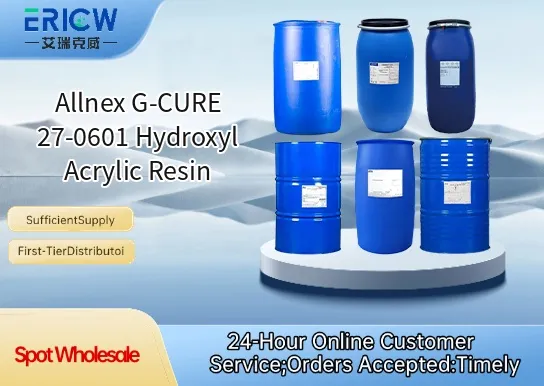
High hydroxyl functionality for efficient crosslinking with melamine and polyisocyanate curing agents.
Excellent compatibility with common solvent-borne and high-solids coating systems.
Superior gloss retention and weather resistance in exterior topcoat applications.
Good flow and leveling characteristics for smooth, defect-free film formation.
Low viscosity profile enabling high-solids formulation without sacrificing application performance.
Automotive OEM and refinish clearcoats and basecoats.
Industrial maintenance coatings for metal substrates.
General-purpose high-performance coil coatings.
Powder coating hybrid systems requiring hydroxyl functionality.
| Chemical Type | Hydroxyl-functional acrylic copolymer |
| Product Form | Liquid resin solution |
| Appearance | Clear to pale yellow, homogeneous liquid |
| Primary Applications | High-solids and solvent-borne thermoset coatings |
| Key Features | High OH value, low volatility, good storage stability |
| Benefits | Enables durable, chemically resistant, UV-stable films |
| Solvent System | Typically xylene / butyl acetate / PGDA blend (customizable) |
| Recommended Cure System | Melamine formaldehyde resins or aliphatic isocyanates |
Q1: What is the primary function of G-CURE 27-0601 in coating formulations?
A: G-CURE 27-0601 is a hydroxyl-functional acrylic resin designed to serve as a reactive binder in thermosetting systems. It provides hydroxyl groups for crosslinking with common curing agents such as melamine formaldehyde, urea-formaldehyde, or polyisocyanates, contributing to film formation, hardness development, and chemical resistance in cured coatings.
Q2: Is G-CURE 27-0601 suitable for low-VOC or high-solids coating systems?
A: Yes — G-CURE 27-0601 is formulated to support high-solids applications and can be integrated into low-VOC coating systems when paired with appropriate solvents and crosslinkers. Its molecular design helps balance viscosity, solids content, and reactivity without requiring excessive solvent dilution.
Q3: How does G-CURE 27-0601 compare to polyester-based hydroxyl resins in terms of weatherability and clarity?
A: As an acrylic resin, G-CURE 27-0601 typically offers superior UV stability, color retention, and gloss retention compared to many conventional polyester hydroxyl resins. It also delivers excellent clarity and minimal yellowing upon aging, making it well-suited for topcoats and clear finishes where long-term appearance is critical.
Q4: What types of crosslinkers are commonly used with G-CURE 27-0601?
A: G-CURE 27-0601 is compatible with a range of amino resins (e.g., highly methylated melamines) and aliphatic or aromatic isocyanate curing agents. Selection depends on cure temperature, pot life requirements, and end-use performance targets such as flexibility, chemical resistance, or exterior durability.
Contact With Us:
E-mail: wangxingqiang@ericwchem.com
Have a Questions? Call Us:
Add:
Building A1, Jiete Industrial Park, Huangpu District, Guangzhou City, Guangdong Province, China