English
 Español
 tiếng việt
 русский
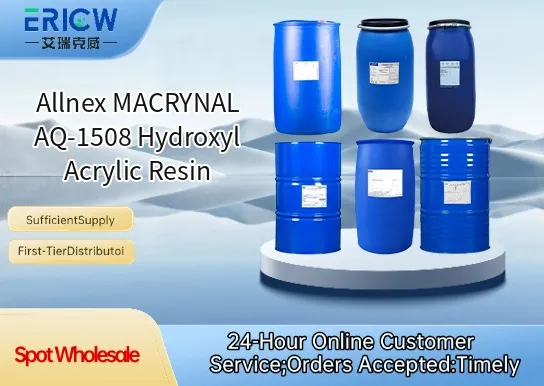
Waterborne hydroxyl-functional acrylic resin designed for high-performance two-component polyurethane coatings.
Offers excellent compatibility with aliphatic isocyanate crosslinkers and co-resins.
Delivers superior gloss retention, hardness development, and chemical resistance in cured films.
Provides low VOC content and compliant with stringent environmental regulations for architectural and industrial applications.
Enables good flow, leveling, and substrate wetting on metal and plastic substrates.
Automotive OEM clearcoats and basecoats.
Industrial maintenance coatings for machinery and equipment.
Architectural metal cladding and façade systems.
Plastic coatings for automotive interior trim and consumer electronics.
General-purpose protective topcoats requiring durability and aesthetics.
| Chemical Type | Hydroxyl-functional acrylic copolymer |
| Product Form | Aqueous dispersion |
| Appearance | Clear to slightly hazy, colorless to pale yellow liquid |
| Solids Content (wt%) | 35–37% |
| pH | 7.5–8.5 |
| Hydroxyl Value (mg KOH/g) | 65–75 |
| Viscosity (mPa·s, 25°C, Brookfield RVT, Spindle #3, 20 rpm) | 150–400 |
| Minimum Film Formation Temperature (MFFT) | ≈25°C |
Q1: What is the primary function of MACRYNAL AQ-1508 in waterborne coating systems?
A: MACRYNAL AQ-1508 serves as a hydroxyl-functional acrylic resin that enables crosslinking with melamine or polyisocyanate curing agents in waterborne industrial coatings. It contributes to film formation, hardness development, and chemical resistance while maintaining good water dispersibility and compatibility with common co-resins.
Q2: Is MACRYNAL AQ-1508 suitable for ambient-cure applications?
A: Yes — it is formulated for ambient- or low-bake crosslinking with blocked isocyanates or melamine resins. Optimal performance is typically achieved at temperatures between 20–40 °C over extended drying times, though full cure properties are enhanced with mild thermal treatment (e.g., 60–80 °C).
Q3: How does MACRYNAL AQ-1508 compare to solventborne hydroxyl acrylics in terms of performance?
A: While offering comparable crosslink density and mechanical properties after full cure, MACRYNAL AQ-1508 delivers lower VOC content and improved workplace safety. Its aqueous dispersion requires careful attention to pH stability, coalescence, and surfactant selection during formulation — differences that may affect application behavior and film appearance versus solventborne analogues.
Q4: Can MACRYNAL AQ-1508 be used in direct-to-metal (DTM) coatings?
A: Yes — it is commonly incorporated into DTM formulations for general industrial maintenance and light-duty OEM applications. Performance in corrosion resistance depends on proper pigment selection, inhibition packages, and overall system design; it is not inherently anticorrosive but provides a robust, adherent binder matrix when formulated accordingly.
Contact With Us:
E-mail: wangxingqiang@ericwchem.com
Have a Questions? Call Us:
Add:
Building A1, Jiete Industrial Park, Huangpu District, Guangzhou City, Guangdong Province, China