English
 Español
 tiếng việt
 русский
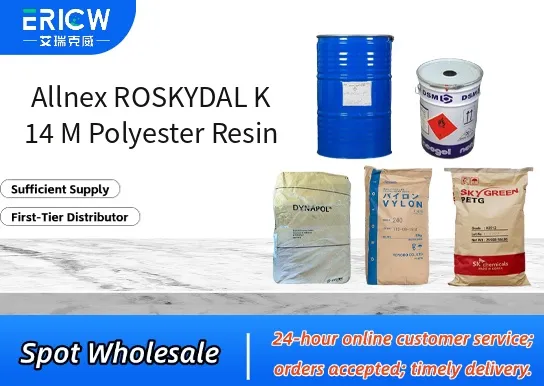
Highly reactive unsaturated polyester resin optimized for fast-cure, low-VOC gel coats and topcoats.
Excellent surface hardness and gloss retention after curing under ambient or accelerated conditions.
Superior weather resistance and UV stability, minimizing chalking and yellowing in outdoor applications.
Good thixotropic behavior enabling excellent sag resistance and smooth application on vertical surfaces.
Compatible with standard MEKP initiators and common styrene diluents for flexible formulation design.
Fiberglass-reinforced plastic (FRP) gel coats for marine hulls and decks.
Architectural cladding and façade panels requiring high aesthetics and durability.
Transportation components including bus and rail exterior panels.
Industrial tanks and chemical-resistant linings exposed to moderate environmental stress.
Decorative composite surfacing for countertops and sanitary ware.
| Chemical Type | Unsaturated polyester resin |
| Product Form | Liquid |
| Appearance | Clear, pale yellow viscous liquid |
| Primary Applications | Gel coats, topcoats, and surfacing resins for FRP |
| Key Features | Fast cure, low styrene emission, high gloss, UV stable |
| Benefits | Reduced cycle time, improved surface finish, enhanced outdoor durability |
| Recommended Initiator | Methyl ethyl ketone peroxide (MEKP) |
| Storage Conditions | Store below 25°C in sealed containers, protect from light and moisture |
Q1: What is the primary function of ROSKYDAL K 14 M in polyester resin systems?
A: ROSKYDAL K 14 M is a reactive diluent and viscosity modifier designed to reduce the viscosity of unsaturated polyester resins without significantly compromising reactivity or final mechanical performance. It participates in the free-radical curing process and becomes an integral part of the crosslinked network.
Q2: Is ROSKYDAL K 14 M compatible with standard peroxide initiators used in polyester curing?
A: Yes, ROSKYDAL K 14 M is fully compatible with common organic peroxides such as MEKP (methyl ethyl ketone peroxide) and BPO (benzoyl peroxide), and does not interfere with typical gel time or cure profile when formulated within recommended dosage ranges.
Q3: How does ROSKYDAL K 14 M compare to styrene in terms of volatility and handling safety?
A: ROSKYDAL K 14 M exhibits significantly lower volatility and higher boiling point than styrene, resulting in reduced VOC emissions during processing and improved workplace exposure profiles. It also offers better odor control and lower skin sensitization potential compared to traditional aromatic diluents.
Q4: Can ROSKYDAL K 14 M be used in formulations requiring enhanced surface hardness or reduced shrinkage?
A: Yes — due to its bifunctional acrylate structure and participation in the polymer network, ROSKYDAL K 14 M can contribute to improved surface hardness and reduced post-cure shrinkage compared to monofunctional diluents, particularly in castings and thick-section laminates.
Contact With Us:
E-mail: wangxingqiang@ericwchem.com
Have a Questions? Call Us:
Add:
Building A1, Jiete Industrial Park, Huangpu District, Guangzhou City, Guangdong Province, China