English
 Español
 tiếng việt
 русский
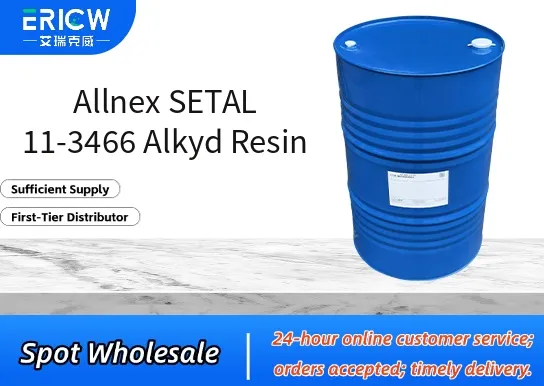
Medium-oil-length alkyd resin based on phthalic anhydride and glycerol for balanced drying and flexibility.
Designed for excellent gloss retention and long-term color stability in air-drying coatings.
Offers good compatibility with nitrocellulose, vinyls, and other common film-formers in solventborne systems.
Delivers superior brushability and flow characteristics in decorative and maintenance-grade paints.
Complies with current VOC regulations for architectural and industrial maintenance applications.
Interior and exterior architectural enamels for wood and metal substrates.
General-purpose maintenance coatings for industrial equipment and infrastructure.
Brush-applied decorative varnishes and clear finishes requiring high clarity and hardness.
Undercoats and primers where adhesion to ferrous and non-ferrous metals is critical.
| Chemical Type | Phthalic–glycerol medium-oil alkyd resin |
| Product Form | Liquid |
| Appearance | Clear, pale yellow viscous liquid |
| Non-Volatile Content (wt%) | ~60–65% |
| Solvent | Xylene / mineral spirits blend |
| Acid Value (mg KOH/g) | 6–10 |
| Viscosity (25°C, mPa·s) | 2,500–4,500 |
| Primary Applications | Architectural enamels, maintenance coatings, varnishes |
Q1: What is the primary application area for SETAL 11-3466?
A: SETAL 11-3466 is a medium-oil alkyd resin designed primarily for solvent-borne decorative and protective coatings, including interior and exterior architectural paints, wood finishes, and general industrial maintenance coatings where balanced drying performance, gloss retention, and substrate adhesion are required.
Q2: Is SETAL 11-3466 compatible with common crosslinkers and co-resins?
A: Yes — it demonstrates good compatibility with melamine-formaldehyde resins, urea-formaldehyde resins, and isocyanate-based hardeners in baked or ambient-cure systems. It also blends well with other alkyds, acrylics, and vinyl resins to modify film properties such as flexibility, hardness, or drying speed.
Q3: How should SETAL 11-3466 be stored and handled?
A: Store in tightly sealed containers in a cool, dry, and well-ventilated area away from direct sunlight and ignition sources. Avoid prolonged exposure to moisture or freezing temperatures. Standard industrial handling practices for organic solvents and resins apply — use appropriate PPE and ensure adequate ventilation during processing.
Q4: Can SETAL 11-3466 be used in low-VOC formulations?
A: While SETAL 11-3466 is formulated for solvent-borne systems, it can contribute to VOC-reduced coatings when combined with high-solids solvents or reactive diluents. Its viscosity and reactivity profile support formulation strategies aimed at meeting regional VOC limits without compromising film integrity or application properties.
Contact With Us:
E-mail: wangxingqiang@ericwchem.com
Have a Questions? Call Us:
Add:
Building A1, Jiete Industrial Park, Huangpu District, Guangzhou City, Guangdong Province, China