English
 Español
 tiếng việt
 русский
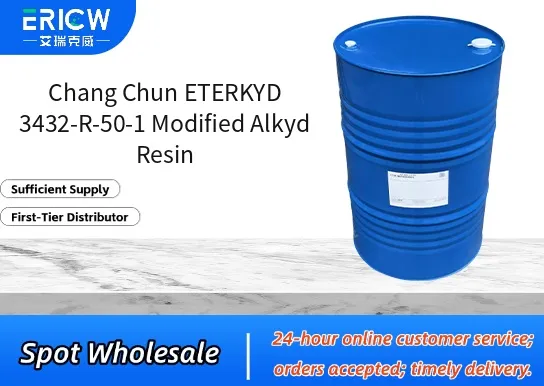
Enhanced drying speed compared to conventional alkyd resins, enabling faster production throughput.
Improved hardness and gloss retention in cured films, supporting high-performance decorative finishes.
Excellent compatibility with common solvents, nitrocellulose, vinyl resins, and thermoplastic acrylics.
Good flexibility and impact resistance, ensuring durability on substrates subject to mechanical stress.
Low volatile organic compound (VOC) formulation, supporting compliance with stringent environmental regulations.
High-gloss industrial maintenance coatings for metal structures and equipment.
Automotive refinish primers and topcoats requiring balanced sandability and film integrity.
Wood furniture and cabinetry coatings demanding rich appearance and scratch resistance.
General-purpose can coatings for non-food-contact metal packaging.
Marine and rail coatings where weather resistance and adhesion to pretreated steel are critical.
| Chemical Type | Styrene-modified alkyd resin |
| Product Form | Liquid solution in aromatic hydrocarbon solvent |
| Appearance | Clear, pale yellow to amber viscous liquid |
| Non-Volatile Content (wt%) | 50 ± 2% |
| Viscosity (25°C, Gardner-Holdt) | K–L |
| Acid Value (mg KOH/g) | 8–12 |
| Softening Point (Ring & Ball, °C) | 35–45 |
| Primary Applications | Industrial maintenance coatings, automotive refinish, wood finishes |
Q1: What is the primary functional advantage of ETERKYD 3432-R-50-1 compared to conventional alkyd resins?
A: ETERKYD 3432-R-50-1 is a styrene-modified alkyd resin designed to deliver enhanced drying speed, improved hardness development, and greater resistance to yellowing—particularly under UV exposure—while maintaining good compatibility with traditional alkyd solvents and co-resins.
Q2: Is this resin suitable for high-solids or low-VOC coating formulations?
A: Yes, ETERKYD 3432-R-50-1 exhibits favorable viscosity characteristics and solubility in aromatic-free or low-aromatic solvent blends, making it well-suited for medium-to-high-solids air-drying systems targeting reduced VOC emissions without compromising film integrity or application performance.
Q3: How does this resin perform in terms of compatibility with acrylics, polyurethanes, or epoxy modifiers?
A: It demonstrates broad compatibility with acrylic co-polymers and short-oil alkyds, and can be successfully blended with hydroxyl-functional acrylics or polyurethane prepolymers for hybrid systems. Compatibility with epoxy resins is limited and requires careful evaluation in specific formulation contexts.
Q4: What are the recommended storage conditions to maintain long-term stability?
A: Store in tightly sealed containers in a cool, dry, and well-ventilated area away from direct sunlight and sources of heat or ignition. Under these conditions, shelf life typically exceeds 12 months from the date of manufacture when unopened.
Contact With Us:
E-mail: wangxingqiang@ericwchem.com
Have a Questions? Call Us:
Add:
Building A1, Jiete Industrial Park, Huangpu District, Guangzhou City, Guangdong Province, China