English
 Español
 tiếng việt
 русский
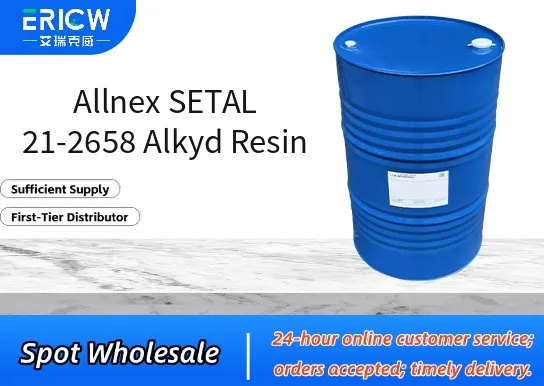
Medium-oil-length alkyd resin offering balanced drying speed and film flexibility.
Excellent compatibility with common solvents, vinyls, and other alkyds for versatile formulation.
Delivers good gloss retention and weather resistance in ambient-cure coatings.
Low-viscosity liquid form enables easy handling and efficient pigment wetting.
Designed for high-solids formulations to support VOC-reduction initiatives without sacrificing performance.
General-purpose industrial maintenance coatings (e.g., machinery, metal structures).
Ambient-cure protective coatings for agricultural and construction equipment.
Decorative architectural coatings for interior/exterior metal substrates.
Undercoats and primers requiring good adhesion and sandability.
Blend components in modified alkyd systems for enhanced durability and recoatability.
| Chemical Type | Medium-oil modified alkyd resin |
| Product Form | Liquid |
| Appearance | Clear to slightly yellow viscous liquid |
| Primary Applications | Industrial maintenance, protective, and decorative coatings |
| Key Features | Good drying speed, flexibility, solvent compatibility, gloss retention |
| Benefits | Easy formulation, VOC-compliant potential, reliable film formation at ambient cure |
| Recommended Solvents | Aromatic hydrocarbons (e.g., xylene), esters, ketones |
| Storage Stability | Stable under cool, dry conditions; avoid prolonged exposure to moisture or freezing |
Q1: What is the primary application area for SETAL 21-2658?
A: SETAL 21-2658 is a medium-oil-length alkyd resin designed primarily for solvent-based decorative and protective coatings, including interior and exterior architectural paints, wood finishes, and general industrial maintenance coatings where good gloss retention, drying performance, and substrate adhesion are required.
Q2: Is SETAL 21-2658 compatible with common crosslinkers used in alkyd systems?
A: Yes — it is formulated to be compatible with traditional cobalt- or manganese-based driers for air-drying applications, and can also be effectively modified or co-reacted with melamine-formaldehyde resins or polyisocyanates in baked or hybrid cure systems, depending on formulation design objectives.
Q3: How does SETAL 21-2658 perform in terms of yellowing resistance?
A: As a conventional alkyd resin based on phthalic anhydride and fatty acids, it exhibits typical oxidative yellowing behavior under UV exposure and heat — making it more suitable for interior applications or formulations where yellowing is less critical. For enhanced non-yellowing performance, alternative resin types such as acrylics or saturated polyesters are recommended.
Q4: Can SETAL 21-2658 be used in high-solids or low-VOC formulations?
A: It can be incorporated into medium-to-high solids alkyd systems when blended with reactive diluents or low-volatility solvents, though its inherent viscosity and oil length may require careful solvent selection and process optimization to meet target VOC limits without compromising film formation or application properties.
Contact With Us:
E-mail: wangxingqiang@ericwchem.com
Have a Questions? Call Us:
Add:
Building A1, Jiete Industrial Park, Huangpu District, Guangzhou City, Guangdong Province, China