English
 Español
 tiếng việt
 русский
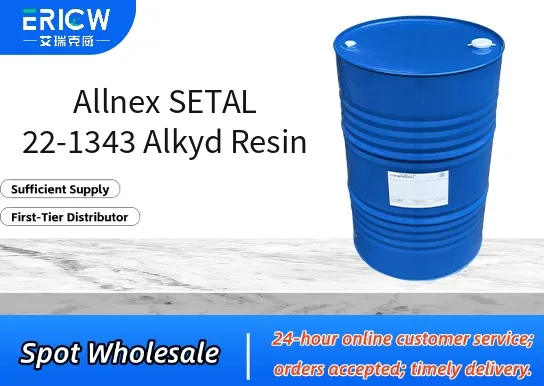
Medium-oil-length alkyd resin based on phthalic anhydride and soybean oil fatty acids.
Designed for excellent through-dry, hardness development, and gloss retention in air-drying systems.
Offers good compatibility with nitrocellulose, acrylics, and other common coating resins.
Delivers balanced flexibility and chemical resistance suitable for general-purpose industrial coatings.
Low volatile organic compound (VOC) formulation support when blended with reactive diluents or low-VOC solvents.
General-purpose air-drying industrial maintenance coatings.
Protective coatings for agricultural and construction equipment.
Undercoat and primer formulations for metal substrates.
Decorative wood finishes requiring good sandability and film integrity.
Enamels for metal furniture and household appliances.
| Chemical Type | Phthalic–soybean oil alkyd resin |
| Product Form | Liquid |
| Appearance | Clear to slightly hazy amber liquid |
| Primary Applications | Air-drying industrial enamels and primers |
| Key Features | Medium oil length, good drying performance, balanced hardness/flexibility |
| Benefits | Improved gloss retention, substrate adhesion, and overcoatability |
| Solubility | Soluble in common aromatic and aliphatic hydrocarbon solvents |
| Storage Stability | Stable under recommended storage conditions (cool, dry, sealed container) |
Q1: What is the primary application area for SETAL 22-1343?
A: SETAL 22-1343 is a medium-oil, cobalt-free alkyd resin specifically designed for high-performance air-drying decorative and protective coatings, including interior and exterior architectural paints, wood finishes, and general industrial maintenance coatings where good gloss retention and through-dry are required.
Q2: Is SETAL 22-1343 compatible with common co-resins and additives?
A: Yes, it exhibits good compatibility with typical acrylic emulsions, vinyl dispersions, melamine-formaldehyde resins, and conventional paint additives such as rheology modifiers, defoamers, and wetting agents—though compatibility testing in the final formulation is always recommended prior to full-scale production.
Q3: How does SETAL 22-1343 perform in terms of drying behavior and film formation?
A: As a cobalt-free alkyd, it relies on autoxidative crosslinking and delivers balanced surface dry and through-dry characteristics under ambient conditions. Film formation is typically robust, offering good hardness development and resistance to dust pickup during the early drying phase.
Q4: Can SETAL 22-1343 be used in water-reducible systems?
A: It is not inherently water-reducible; however, it can be incorporated into waterborne hybrid systems—such as alkyd-acrylic emulsions—via proper emulsification or dispersion techniques. Formulators should adjust pH, surfactant selection, and shear conditions to ensure stable incorporation and long-term colloidal stability.
Contact With Us:
E-mail: wangxingqiang@ericwchem.com
Have a Questions? Call Us:
Add:
Building A1, Jiete Industrial Park, Huangpu District, Guangzhou City, Guangdong Province, China