English
 Español
 tiếng việt
 русский
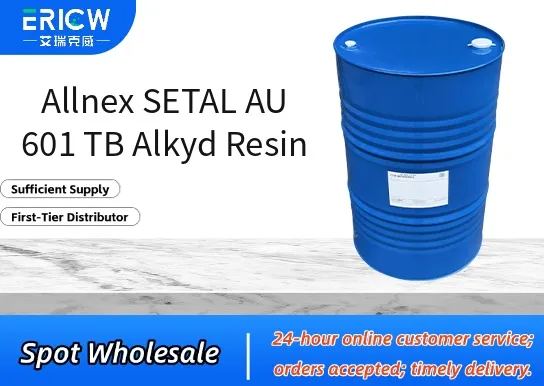
Medium-oil-length alkyd resin based on phthalic anhydride and soybean oil fatty acids.
Designed for excellent through-dry performance and good hardness development in air-drying systems.
Offers balanced flexibility, gloss retention, and compatibility with common organic solvents and co-resins.
Low volatile organic compound (VOC) formulation suitable for regulatory-compliant industrial coatings.
Consistent batch-to-batch reproducibility supported by Allnex’s global quality control standards.
General-purpose industrial maintenance coatings for metal substrates.
Air-drying primers and topcoats in agricultural and construction equipment finishes.
Decorative wood coatings requiring good sandability and film clarity.
Undercoat formulations for automotive refinish and OEM component applications.
| Chemical Type | Medium-oil modified phthalic alkyd resin |
| Product Form | Liquid |
| Appearance | Clear to slightly hazy amber liquid |
| Primary Applications | Industrial maintenance, wood, and metal air-drying coatings |
| Key Features | Good drying speed, hardness build, and solvent compatibility |
| Benefits | Reliable performance in low-VOC, high-solids formulations |
| Solubility | Compatible with aromatic hydrocarbons, esters, and ketones |
| Storage Stability | Stable for ≥12 months in sealed containers at 15–25°C |
Q1: What is the primary application field for SETAL AU 601 TB?
A: SETAL AU 601 TB is a solvent-borne, low-viscosity alkyd resin specifically designed for high-performance industrial maintenance coatings and protective finishes, particularly where fast drying, good gloss retention, and excellent substrate wetting are required.
Q2: Is SETAL AU 601 TB compatible with common crosslinkers used in industrial coatings?
A: Yes — it is formulated to be readily compatible with melamine-formaldehyde resins and isocyanate-based hardeners, enabling use in both thermosetting alkyd/melamine and alkyd/polyisocyanate hybrid systems.
Q3: How does SETAL AU 601 TB contribute to film formation and drying performance?
A: Its low viscosity and optimized fatty acid composition promote rapid solvent release and efficient oxidative crosslinking, supporting short through-dry times and robust early hardness development without requiring excessive catalyst levels.
Q4: Can SETAL AU 601 TB be used in high-solids coating formulations?
A: Yes — its inherently low viscosity allows for higher solids content while maintaining acceptable application viscosity, making it suitable for reformulation efforts aimed at reducing VOC emissions without sacrificing flow or leveling.
Q5: What are typical handling and storage recommendations?
A: Store in tightly sealed containers in a cool, dry, well-ventilated area away from direct sunlight and ignition sources. Avoid prolonged exposure to elevated temperatures or moisture ingress, which may affect viscosity stability over time.
Contact With Us:
E-mail: wangxingqiang@ericwchem.com
Have a Questions? Call Us:
Add:
Building A1, Jiete Industrial Park, Huangpu District, Guangzhou City, Guangdong Province, China