English
 Español
 tiếng việt
 русский
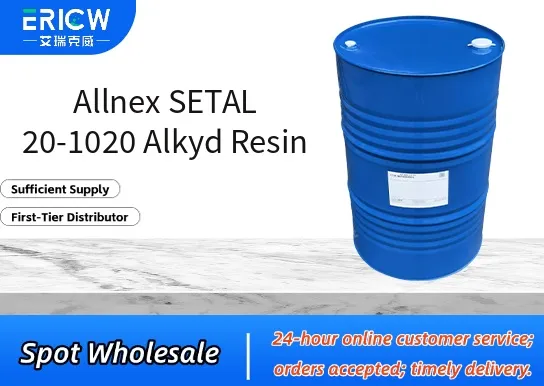
Medium-oil-length alkyd resin based on phthalic anhydride and glycerol for balanced drying and flexibility.
Designed for excellent gloss retention and long-term color stability in air-drying coatings.
Offers good compatibility with common hydrocarbon solvents and conventional coating additives.
Delivers robust film formation with enhanced hardness development and resistance to blocking.
Formulated for low VOC compliance in solvent-borne decorative and protective coatings.
Architectural solvent-borne decorative paints (interior and exterior walls).
General-purpose maintenance coatings for metal and wood substrates.
Industrial maintenance enamels requiring good weatherability and touch-up performance.
Undercoat systems for OEM and aftermarket automotive refinish primers.
Marine and offshore protective coatings where moderate chemical resistance is required.
| Chemical Type | Phthalic–glycerol medium-oil alkyd resin |
| Product Form | Liquid, solvent-borne (xylene/toluene blend) |
| Appearance | Clear to slightly hazy amber liquid |
| Non-Volatile Content (wt%) | 50–52% |
| Acid Value (mg KOH/g) | 6–8 |
| Saponification Value (mg KOH/g) | 170–185 |
| Viscosity (mPa·s, 25°C, Brookfield LV, Spindle #3, 6 rpm) | 2,500–4,000 |
| Primary Applications | Decorative and protective solvent-borne coatings |
Q1: What is the primary application field for SETAL 20-1020?
A: SETAL 20-1020 is a medium-oil-length alkyd resin designed primarily for solvent-based decorative and industrial maintenance coatings, including primers, undercoats, and mid-coats where balanced drying performance, gloss retention, and substrate adhesion are required.
Q2: Is SETAL 20-1020 compatible with common crosslinkers used in two-component systems?
A: Yes — SETAL 20-1020 exhibits good compatibility with melamine-formaldehyde resins and isothermal-curing amino resins. It can also be formulated with polyisocyanates in hybrid systems, though compatibility and cure profile should be verified during formulation development.
Q3: How does SETAL 20-1020 perform in terms of drying behavior and film formation?
A: As a cobalt-free, air-drying alkyd, it offers reliable through-dry and surface-dry characteristics under ambient conditions. Film formation yields good hardness development and flexibility, making it suitable for applications requiring mechanical durability without post-baking.
Q4: Can SETAL 20-1020 be used in high-solids formulations?
A: Yes — its viscosity and molecular weight profile support high-solids coating formulations. Adjustments to solvent blend and rheology modifiers may be needed to achieve target application viscosity and sag resistance.
Contact With Us:
E-mail: wangxingqiang@ericwchem.com
Have a Questions? Call Us:
Add:
Building A1, Jiete Industrial Park, Huangpu District, Guangzhou City, Guangdong Province, China