English
 Español
 tiếng việt
 русский
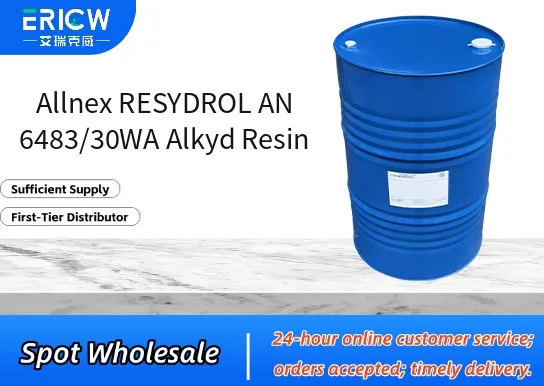
Water-reducible alkyd resin enabling low-VOC, high-performance coatings without co-solvents.
Excellent gloss retention and long-term durability in exterior architectural and industrial applications.
Good compatibility with acrylic emulsions and other waterborne resins for hybrid formulation flexibility.
Fast ambient cure with balanced drying profile—tack-free within 2–4 hours at 23°C/50% RH.
Low yellowing tendency due to optimized fatty acid composition and controlled oxidation pathway.
Waterborne architectural primers and topcoats for masonry and wood substrates.
Industrial maintenance coatings for metal structures, fences, and railings.
Decorative interior wall paints requiring enhanced scrub resistance and film integrity.
Hybrid waterborne systems combining alkyd performance with acrylic weatherability.
Low-VOC refurbishment coatings for heritage buildings and sensitive environments.
| Chemical Type | Water-reducible alkyd resin (modified soybean oil-based) |
| Product Form | Aqueous dispersion |
| Appearance | Opaque white to off-white liquid |
| pH (10% aqueous solution) | 7.5–8.5 |
| Solids Content (wt%) | 30.0 ± 1.0% |
| Viscosity (Brookfield RVT, #2 spindle, 20 rpm, 23°C) | 1,200–2,500 cP |
| Primary Applications | Architectural & industrial waterborne coatings |
| Key Features | Low-VOC, fast ambient cure, excellent gloss and durability |
Q1: What is the primary application area for RESYDROL AN 6483/30WA?
A: RESYDROL AN 6483/30WA is a water-reducible alkyd resin designed primarily for high-performance industrial maintenance and protective coatings, including metal primers, topcoats, and general-purpose finishes where balanced drying, gloss retention, and substrate adhesion are required.
Q2: How does this resin differ from conventional solvent-based alkyds?
A: Unlike traditional solvent-borne alkyds, AN 6483/30WA is formulated to be water-reducible—enabling significant reduction in VOC content while maintaining good film formation, hardness development, and compatibility with common co-solvents and crosslinkers used in hybrid systems.
Q3: Is RESYDROL AN 6483/30WA compatible with amine catalysts or common crosslinking agents?
A: Yes, it exhibits good compatibility with standard amine catalysts (e.g., dimethylethanolamine) and can be effectively crosslinked with melamine-formaldehyde resins or polyisocyanates in hybrid formulations, depending on the desired cure profile and performance requirements.
Q4: What are typical formulation guidelines for achieving optimal stability and film properties?
A: For stable dispersions and optimal film performance, it is recommended to neutralize the resin with a suitable amine prior to water addition, use low-VOC co-solvents (e.g., dipropylene glycol monomethyl ether), and ensure adequate shear during dispersion. Final pH should generally be maintained between 7.5 and 9.0.
Contact With Us:
E-mail: wangxingqiang@ericwchem.com
Have a Questions? Call Us:
Add:
Building A1, Jiete Industrial Park, Huangpu District, Guangzhou City, Guangdong Province, China