English
 Español
 tiếng việt
 русский
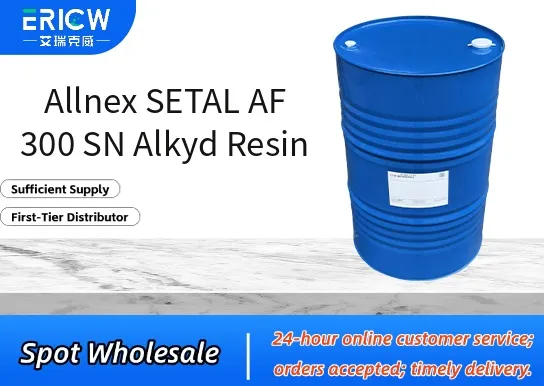
Medium-oil-length alkyd resin based on phthalic anhydride and soybean oil fatty acids.
Designed for excellent gloss retention and long-term durability in ambient-cure coatings.
Offers balanced drying speed — fast enough for efficient production, slow enough to ensure good flow and leveling.
Compatible with common hydrocarbon solvents and widely used co-resins including melamine-formaldehyde and urea-formaldehyde.
Delivers superior flexibility and impact resistance in dried films, supporting performance on metal substrates.
General-purpose industrial maintenance coatings for steel structures and equipment.
Decorative and protective finishes for agricultural and construction machinery.
Coatings for metal furniture and outdoor metal fixtures requiring weather resistance.
Base resin in air-drying enamels for OEM and aftermarket automotive refinish applications.
Formulation component in high-solids, low-VOC solventborne industrial topcoats.
| Chemical Type | Phthalic–soybean oil alkyd resin |
| Product Form | Liquid |
| Appearance | Clear to slightly hazy amber liquid |
| Primary Applications | Air-drying industrial coatings, maintenance enamels, metal protective finishes |
| Key Features | Medium oil length, ambient cure, good compatibility, balanced drying |
| Benefits | Excellent gloss, flexibility, adhesion to metal, and UV stability |
| Solubility | Compatible with xylene, mineral spirits, and aromatic hydrocarbon blends |
| Storage Stability | Stable under normal warehouse conditions (15–25°C); avoid freezing |
Q1: What is the primary function of SETAL AF 300 SN in alkyd-based coatings?
A: SETAL AF 300 SN is a specialty alkyd resin designed to enhance surface leveling, reduce orange peel, and improve flow characteristics in solventborne decorative and industrial alkyd coatings—without compromising drying performance or film hardness.
Q2: Is SETAL AF 300 SN compatible with conventional long-oil and medium-oil alkyds?
A: Yes, it demonstrates excellent compatibility with a broad range of conventional alkyd resins—including both long-oil and medium-oil types—as well as common hydrocarbon solvents and ester-based thinners typically used in ambient-cure alkyd systems.
Q3: How does SETAL AF 300 SN affect drying behavior in formulated coatings?
A: It supports standard air-oxidative drying mechanisms typical of alkyd systems and does not significantly delay through-dry or surface dry times when used at recommended dosage levels. Its molecular structure is engineered to maintain balanced reactivity during film formation.
Q4: Can SETAL AF 300 SN be used in high-solids alkyd formulations?
A: Yes—it is suitable for high-solids alkyd systems due to its relatively low viscosity and favorable rheological contribution, helping formulators achieve target solids content while maintaining application stability and sag resistance.
Contact With Us:
E-mail: wangxingqiang@ericwchem.com
Have a Questions? Call Us:
Add:
Building A1, Jiete Industrial Park, Huangpu District, Guangzhou City, Guangdong Province, China