English
 Español
 tiếng việt
 русский
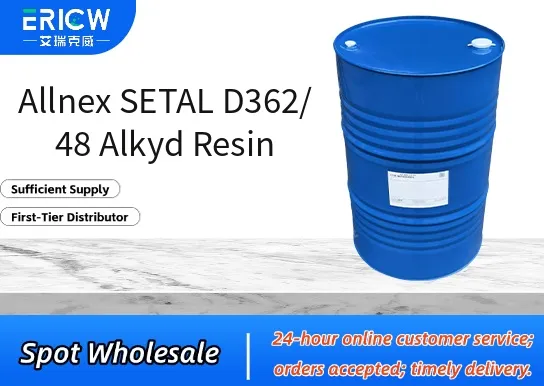
Medium-oil-length alkyd resin based on phthalic anhydride and soybean oil fatty acids.
Designed for excellent gloss retention and film hardness development in air-drying systems.
Offers balanced drying speed and good compatibility with common solvents and co-resins.
Delivers superior flexibility and impact resistance in final coatings.
Provides enhanced yellowing resistance compared to conventional long-oil alkyds.
General-purpose industrial maintenance coatings.
Decorative architectural primers and topcoats.
Wood finishing systems for furniture and cabinetry.
Undercoat and mid-coat formulations for metal substrates.
Brushable and spray-applied solventborne decorative paints.
| Chemical Type | Phthalic–soybean oil alkyd resin |
| Product Form | Liquid |
| Appearance | Clear to slightly hazy, pale yellow liquid |
| Primary Applications | Industrial maintenance coatings, architectural paints, wood finishes |
| Key Features | Medium oil length, air-drying, solvent-thinnable |
| Benefits | Good balance of hardness, flexibility, and drying performance |
| Solvent Compatibility | Compatible with aromatic hydrocarbons, esters, and ketones |
| Storage Stability | Stable under dry, cool conditions (15–25°C); avoid freezing |
Q1: What is the primary application field for SETAL D362/48?
A: SETAL D362/48 is a medium-oil alkyd resin designed primarily for solvent-based decorative and protective coatings, including interior and exterior architectural paints, wood finishes, and general-purpose industrial maintenance coatings where balanced drying performance, gloss retention, and substrate adhesion are required.
Q2: Is SETAL D362/48 suitable for use in high-solids formulations?
A: Yes — its moderate molecular weight and controlled viscosity allow it to be effectively incorporated into high-solids alkyd systems. Formulators typically adjust solvent blends and may combine it with reactive diluents or low-viscosity co-resins to meet target VOC and rheology requirements.
Q3: How does SETAL D362/48 perform in terms of drying and through-dry characteristics?
A: It offers good surface dry and acceptable through-dry under ambient conditions, benefiting from its balanced oil length and functional group profile. Drying speed can be further enhanced using conventional cobalt- or manganese-based driers, though compatibility and dosage should be verified in the final formulation.
Q4: Can SETAL D362/48 be used in combination with acrylic or polyurethane resins?
A: Yes — it demonstrates good compatibility with many acrylic solution resins and hydroxyl-functional polyurethane prepolymers, enabling hybrid systems that leverage alkyd flexibility and urethane/acrylic durability. Compatibility testing in the intended solvent blend and at target ratios is recommended prior to scale-up.
Contact With Us:
E-mail: wangxingqiang@ericwchem.com
Have a Questions? Call Us:
Add:
Building A1, Jiete Industrial Park, Huangpu District, Guangzhou City, Guangdong Province, China