English
 Español
 tiếng việt
 русский
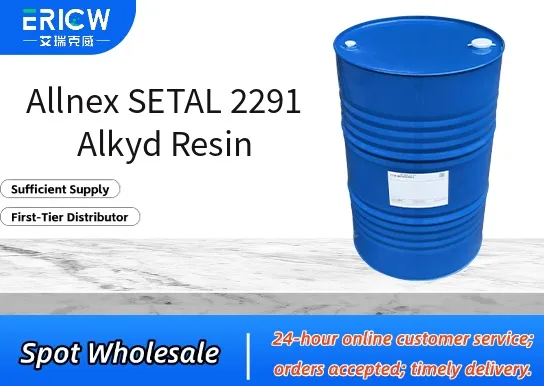
Medium-oil-length alkyd resin offering balanced drying speed and film flexibility.
Excellent compatibility with nitrocellulose, acrylics, and other common coating resins.
Provides good gloss retention and resistance to yellowing in interior applications.
Low-viscosity liquid simplifies formulation and enables high-solids, low-VOC coating systems.
Consistent batch-to-batch performance ensured by Allnex’s stringent quality control protocols.
Interior wood varnishes and clear finishes for furniture and cabinetry.
Decorative architectural coatings for interior trim, doors, and moldings.
Repair and maintenance coatings for residential and commercial interiors.
Basecoats and clearcoats in blended solventborne decorative systems.
Industrial maintenance primers requiring flexibility and adhesion over wood substrates.
| Chemical Type | Medium-oil modified alkyd resin |
| Product Form | Liquid |
| Appearance | Clear, pale yellow to amber viscous liquid |
| Primary Applications | Interior wood coatings, decorative varnishes, maintenance finishes |
| Key Features | Good flow/leveling, low yellowing tendency, nitrocellulose-compatible |
| Benefits | Enables high-gloss, durable films with ease of application and recoatability |
| Solubility | Compatible with common aromatic and aliphatic hydrocarbons, ketones, and esters |
| Storage Stability | Stable for ≥12 months in sealed containers at 15–25°C |
Q1: What is the primary application field for SETAL 2291?
A: SETAL 2291 is a medium-oil-length alkyd resin designed primarily for solvent-based decorative and protective coatings, including interior and exterior architectural paints, wood finishes, and general industrial maintenance coatings where good gloss retention, drying performance, and substrate adhesion are required.
Q2: Is SETAL 2291 compatible with common crosslinkers used in alkyd systems?
A: Yes, SETAL 2291 is formulated to be compatible with traditional driers (e.g., cobalt, zirconium, and calcium-based) and can also be used in combination with amino resins or melamine-formaldehyde crosslinkers in baked systems, depending on formulation design and cure conditions.
Q3: How does SETAL 2291 perform in terms of drying behavior and film formation?
A: SETAL 2291 offers balanced through-dry and surface-dry characteristics typical of medium-oil alkyds, supporting good leveling and film integrity. It provides acceptable air-dry performance in ambient conditions and enhanced cure response when used with appropriate drier packages.
Q4: Can SETAL 2291 be blended with other resin types?
A: Yes, SETAL 2291 demonstrates good compatibility with many common co-resins, including acrylics, vinyls, and certain polyurethane dispersions, enabling hybrid formulations that balance cost, performance, and regulatory compliance—though compatibility testing under intended use conditions is recommended.
Contact With Us:
E-mail: wangxingqiang@ericwchem.com
Have a Questions? Call Us:
Add:
Building A1, Jiete Industrial Park, Huangpu District, Guangzhou City, Guangdong Province, China