English
 Español
 tiếng việt
 русский
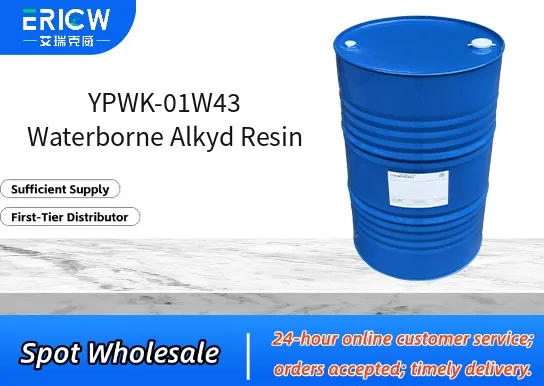
Low-VOC formulation compliant with global environmental regulations including EU REACH and US EPA standards.
Excellent film formation at ambient temperature with rapid dry-to-touch and through-dry performance.
Superior compatibility with acrylic emulsions, waterborne polyurethane dispersions, and common coalescing agents.
Enhanced hydrolytic stability—maintains viscosity and clarity over 6 months in sealed storage at 5–30°C.
Delivers balanced hardness, flexibility, and chemical resistance typical of solventborne alkyds—without organic solvents.
Architectural interior wall paints requiring durable, scrubbable finishes.
Waterborne wood coatings for furniture, cabinetry, and millwork.
Industrial maintenance coatings for metal substrates in mild-corrosion environments.
Decorative metal primers and topcoats for appliances and office furniture.
Hybrid waterborne systems combining alkyd functionality with acrylic weatherability.
| Chemical Type | Water-reducible modified alkyd resin |
| Product Form | Aqueous dispersion (non-ionic stabilized) |
| Appearance | Translucent to slightly hazy, light amber liquid |
| Solids Content (wt%) | 42 ± 1% |
| pH (25°C) | 7.8–8.3 |
| Viscosity (Brookfield, RVT, #2 spindle, 20 rpm, 25°C) | 80–120 mPa·s |
| Density (25°C) | 1.02–1.05 g/cm³ |
| Minimum Film Formation Temperature (MFFT) | 12°C |
Q1: What are the primary advantages of YPWK-01W43 compared to traditional solvent-based alkyd resins?
A: YPWK-01W43 offers significantly reduced VOC content while retaining the familiar handling characteristics and film performance of conventional alkyds—such as good gloss development, substrate wetting, and oxidative crosslinking behavior—making it suitable for reformulating existing solvent-borne systems into more sustainable waterborne alternatives.
Q2: Is YPWK-01W43 compatible with common waterborne acrylic or polyurethane dispersions?
A: Yes, YPWK-01W43 is designed for broad compatibility in hybrid waterborne systems and can be successfully blended with acrylic emulsions, PUDs, and other waterborne polymers—typically without phase separation—though formulation stability should always be verified under intended storage and processing conditions.
Q3: How should YPWK-01W43 be incorporated into a waterborne paint formulation?
A: It is typically added during the let-down stage, after dispersion of pigments and fillers, and under moderate agitation. Pre-dilution with deionized water or co-solvent may aid uniform incorporation, especially in high-solids formulations. Avoid high-shear mixing immediately after addition to prevent viscosity instability.
Q4: Does YPWK-01W43 require a catalyst or drier for film formation?
A: Like conventional alkyds, YPWK-01W43 relies on autoxidative curing and benefits from standard water-compatible cobalt- or manganese-based driers to achieve optimal through-dry and hardness development. Catalyst selection and dosage depend on drying requirements and regulatory constraints in the target market.
Contact With Us:
E-mail: wangxingqiang@ericwchem.com
Have a Questions? Call Us:
Add:
Building A1, Jiete Industrial Park, Huangpu District, Guangzhou City, Guangdong Province, China