English
 Español
 tiếng việt
 русский
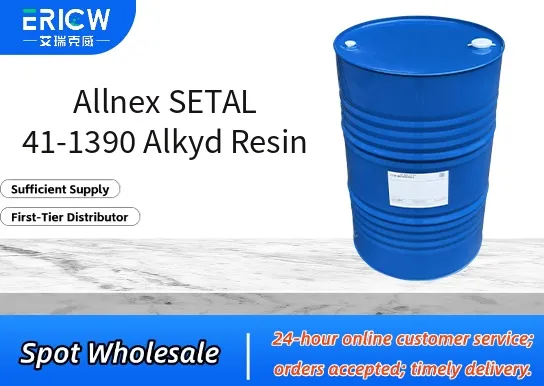
Medium-oil-length alkyd resin based on phthalic anhydride and soybean oil fatty acids.
Designed for excellent gloss retention and through-dry performance in ambient-cure coatings.
Offers balanced hardness development and flexibility for durable film formation.
Compatible with common amino resins, melamine-formaldehyde crosslinkers, and conventional solvents.
Provides good pigment wetting and substrate adhesion on metal and wood substrates.
Industrial maintenance coatings for structural steel and equipment.
General-purpose air-drying enamels for metal furniture and fixtures.
Wood finishing systems including varnishes and clear topcoats.
Undercoat primers requiring corrosion resistance and sandability.
| Chemical Type | Medium-oil modified phthalic/soybean oil alkyd |
| Product Form | Liquid resin solution |
| Appearance | Clear to slightly hazy, pale yellow liquid |
| Primary Applications | Air-drying industrial enamels, varnishes, primers |
| Key Features | Good gloss, through-dry, flexibility, crosslinker compatibility |
| Benefits | Robust film integrity, ease of formulation, broad solvent compatibility |
| VOC Content (typical) | Approx. 500–600 g/L (varies with solvent blend) |
Q1: What is the primary application area for SETAL 41-1390?
A: SETAL 41-1390 is a medium-oil-length alkyd resin designed primarily for solvent-based decorative and protective coatings, including interior and exterior architectural paints, wood finishes, and general industrial maintenance coatings where balanced drying performance, gloss retention, and film flexibility are required.
Q2: Is SETAL 41-1390 compatible with common co-resins and additives?
A: Yes, it exhibits good compatibility with typical coating resins such as melamine-formaldehyde crosslinkers, acrylics, and polyurethane modifiers, as well as conventional solvents, driers, rheology modifiers, and pigment dispersants used in alkyd-based systems.
Q3: How does SETAL 41-1390 perform in terms of drying and through-dry?
A: It offers balanced surface dry and through-dry characteristics typical of medium-oil alkyds, supporting efficient production workflows in both ambient-cure and forced-dry applications without excessive tackiness or skinning issues.
Q4: Can SETAL 41-1390 be used in low-VOC formulations?
A: Yes — its formulation flexibility allows adaptation to lower-VOC systems when combined with high-solids solvents or reactive diluents, though final VOC content depends on the full formulation and regulatory compliance must be verified per regional requirements.
Contact With Us:
E-mail: wangxingqiang@ericwchem.com
Have a Questions? Call Us:
Add:
Building A1, Jiete Industrial Park, Huangpu District, Guangzhou City, Guangdong Province, China