English
 Español
 tiếng việt
 русский
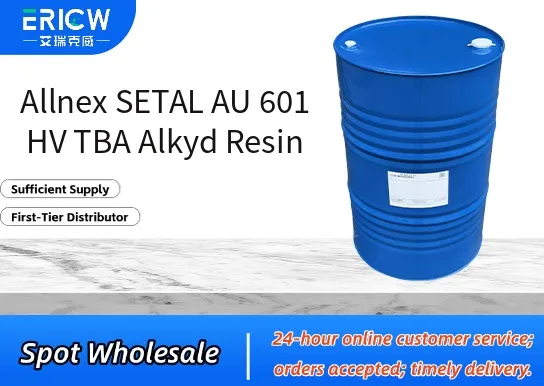
High-solids, low-VOC alkyd resin designed for sustainable industrial coatings.
Excellent flow and leveling properties for high-gloss, defect-free film formation.
Superior drying performance with balanced through-dry and surface-dry characteristics.
Enhanced compatibility with acrylics, epoxies, and common crosslinkers for hybrid systems.
Good chemical resistance and long-term durability in demanding atmospheric exposure.
Industrial maintenance coatings for steel structures and equipment.
General-purpose metal protective coatings (e.g., agricultural machinery, utility poles).
High-performance marine topside and deck coatings.
Architectural metal cladding and façade systems requiring weather resistance.
Refinish coatings for heavy-duty vehicles and rail applications.
| Chemical Type | Tall oil fatty acid–modified alkyd resin |
| Product Form | Liquid |
| Appearance | Clear to slightly hazy, amber liquid |
| Primary Applications | High-solids industrial maintenance and protective coatings |
| Key Features | Low VOC, high solids, fast air-dry capability |
| Benefits | Reduced solvent emissions, improved application efficiency, excellent gloss retention |
| Solvent | Xylene / aromatic hydrocarbon blend |
| Storage Stability | Stable under dry, cool conditions (≤30°C); avoid freezing |
Q1: What is the primary function of SETAL AU 601 HV TBA in coating formulations?
A: SETAL AU 601 HV TBA is a high-viscosity, tertiary-butylamine-modified alkyd resin designed to act as a reactive rheology modifier and film-forming binder. It imparts thixotropic behavior, improves sag resistance in vertical applications, and enhances intercoat adhesion without compromising gloss or clarity in solventborne systems.
Q2: Is SETAL AU 601 HV TBA compatible with common solventborne resins and crosslinkers?
A: Yes — it demonstrates broad compatibility with conventional alkyds, acrylics, polyesters, and melamine formaldehyde crosslinkers in standard solventborne industrial and protective coatings. Compatibility should always be verified in the final formulation due to sensitivity to acid number and solvent polarity.
Q3: How does the TBA modification influence storage stability and application performance?
A: The tertiary-butylamine (TBA) group provides latent reactivity and enhances colloidal stability in solution, reducing the risk of gelation during storage. During application and cure, it contributes to controlled viscosity build and improved flow-leveling balance, especially under ambient or low-bake conditions.
Q4: Can SETAL AU 601 HV TBA be used in high-solids or low-VOC formulations?
A: It is suitable for medium-to-high solids solventborne systems and can support VOC reduction efforts when combined with appropriate solvent blends. However, its high inherent viscosity means formulators typically use it at low concentrations to maintain workable rheology without excessive dilution.
Contact With Us:
E-mail: wangxingqiang@ericwchem.com
Have a Questions? Call Us:
Add:
Building A1, Jiete Industrial Park, Huangpu District, Guangzhou City, Guangdong Province, China