English
 Español
 tiếng việt
 русский
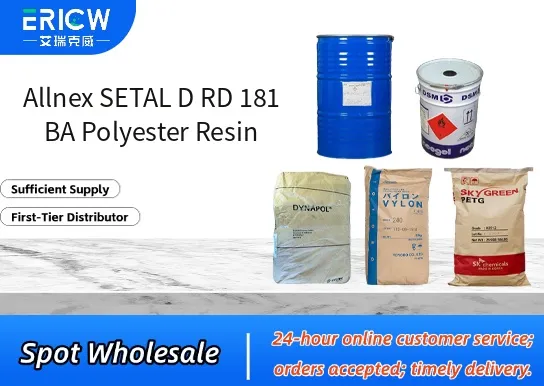
High-solids, low-VOC alkyd-modified polyester resin for sustainable coating formulations.
Excellent flow and leveling properties, enabling smooth, defect-free film formation.
Good compatibility with amino resins (e.g., melamine-formaldehyde) for thermosetting baking systems.
Enhanced hydrolytic stability compared to conventional polyester resins, supporting robust storage life.
Designed for balanced reactivity—sufficient cure speed without premature gelation during processing.
Automotive OEM and refinish topcoats requiring high gloss and weather resistance.
Industrial maintenance coatings for metal substrates, including agricultural and construction equipment.
Appliance coatings for refrigerators, ovens, and laundry units demanding durability and aesthetic performance.
General-purpose coil coatings where flexibility, corrosion resistance, and bake efficiency are critical.
Powder coating hybrid systems leveraging polyester–melamine crosslinking chemistry.
| Chemical Type | Alkyd-modified saturated polyester resin |
| Product Form | Liquid, solvent-based |
| Appearance | Clear to pale yellow, homogeneous liquid |
| Primary Applications | Thermosetting decorative and protective coatings (baking systems) |
| Key Features | High solids (>70% w/w), low VOC, amino-reactive, good compatibility |
| Recommended Crosslinker | High- or medium-amino melamine resins |
| Storage Stability | ≥6 months at 20–25°C in sealed original container |
| Regulatory Compliance | REACH compliant;不含 intentionally added PFAS, heavy metals, or APEOs |
Q1: What is the primary application of SETAL D RD 181 BA in coating systems?
A: SETAL D RD 181 BA is a benzyl alcohol-soluble, low-viscosity unsaturated polyester resin designed primarily for high-gloss, durable coil and can coatings where excellent flow, leveling, and substrate adhesion are required—especially on metal substrates such as tinplate and aluminum.
Q2: Is SETAL D RD 181 BA compatible with common crosslinkers used in thermosetting coil coatings?
A: Yes, it exhibits good reactivity and compatibility with standard amino resins (e.g., melamine-formaldehyde types), enabling efficient cure at typical coil coating line temperatures. Formulators should confirm optimal stoichiometry and cure schedule through lab-scale testing.
Q3: How does SETAL D RD 181 BA contribute to film performance in food-can applications?
A: It supports the development of compliant internal can coatings with good chemical resistance, low extractables, and strong adhesion after retorting—key attributes for food-contact applications. Final regulatory compliance depends on the full formulation, processing conditions, and end-use requirements.
Q4: What solvents are recommended for diluting SETAL D RD 181 BA during formulation?
A: The resin is fully soluble in benzyl alcohol and shows good miscibility with aromatic hydrocarbons (e.g., xylene, Solvesso™ types) and certain ketones. Avoid highly polar protic solvents that may affect stability or cure behavior.
Contact With Us:
E-mail: wangxingqiang@ericwchem.com
Have a Questions? Call Us:
Add:
Building A1, Jiete Industrial Park, Huangpu District, Guangzhou City, Guangdong Province, China