English
 Español
 tiếng việt
 русский
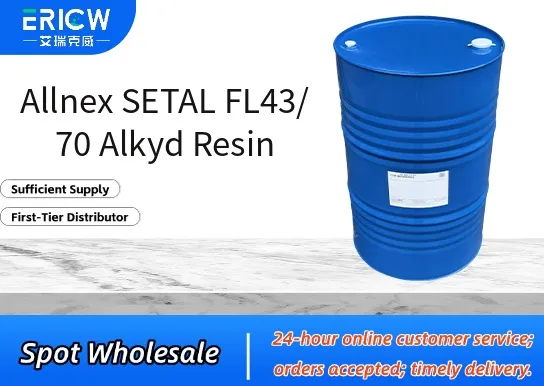
Medium-oil-length alkyd resin offering balanced drying speed and film flexibility.
Excellent compatibility with nitrocellulose, acrylics, and other common coating resins.
Provides good gloss retention and weather resistance in ambient-cure systems.
Low-viscosity liquid form enables easy handling and high-solids formulation potential.
Designed for VOC-compliant coatings with optimized solvent release profile.
General-purpose industrial maintenance coatings.
Ambient-cured metallic and wood finishes.
Undercoats and primers for metal substrates.
Decorative enamel topcoats for interior and exterior applications.
Repair and touch-up formulations requiring fast tack-free time.
| Chemical Type | Medium-oil-length modified alkyd resin |
| Product Form | Clear to pale yellow viscous liquid |
| Appearance | Homogeneous, transparent, free from sediment |
| Primary Applications | Industrial maintenance coatings, enamels, primers |
| Key Features | Good flow & leveling, ambient cure, solvent-thinnable |
| Benefits | Fast dust-free time, excellent substrate adhesion, gloss stability |
| Solvent System | Aromatic hydrocarbons (e.g., xylene, Solvesso™ 100) |
| Storage Stability | 12 months in unopened original container at 15–25°C |
Q1: What is the primary application field for SETAL FL43/70?
A: SETAL FL43/70 is a fast-drying, low-viscosity alkyd resin designed primarily for high-gloss decorative and protective solventborne coatings, including wood finishes, metal primers, and general industrial maintenance paints where good flow, leveling, and through-dry are required.
Q2: Is SETAL FL43/70 compatible with common crosslinkers and additives used in alkyd systems?
A: Yes — it demonstrates broad compatibility with traditional driers (e.g., cobalt-, zirconium-, and calcium-based), other alkyd resins, rosin esters, and common solvents such as xylene, mineral spirits, and esters. It can also be formulated alongside melamine-formaldehyde resins in thermosetting systems, subject to compatibility testing.
Q3: How does SETAL FL43/70 contribute to film formation and drying performance?
A: Its optimized fatty acid composition and medium oil length promote rapid autoxidative crosslinking, resulting in improved surface dry and through-dry times compared to conventional long-oil alkyds — especially under ambient conditions — while maintaining flexibility and adhesion.
Q4: Can SETAL FL43/70 be used in low-VOC formulations?
A: Yes — its relatively low viscosity allows for reduced solvent demand in many applications, supporting formulators aiming for lower VOC content. However, final VOC levels depend on the full formulation, including solvents, additives, and pigments, and must be verified per regional regulatory definitions.
Contact With Us:
E-mail: wangxingqiang@ericwchem.com
Have a Questions? Call Us:
Add:
Building A1, Jiete Industrial Park, Huangpu District, Guangzhou City, Guangdong Province, China