English
 Español
 tiếng việt
 русский
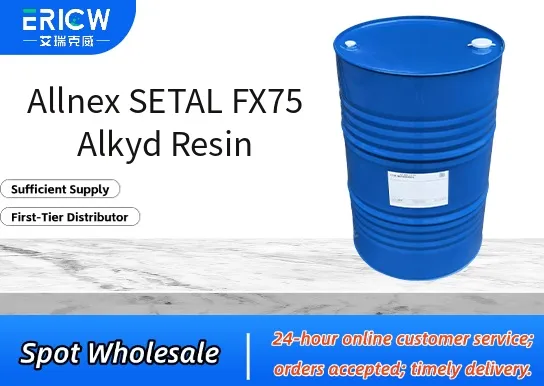
Fast-drying, solvent-based short-oil alkyd resin for high-gloss decorative finishes.
Excellent compatibility with nitrocellulose, acrylics, and other common coating resins.
Delivers superior hardness development and early block resistance in air-dry systems.
Provides outstanding flow, leveling, and substrate wetting on wood and metal substrates.
Formulated for low VOC compliance in architectural and industrial maintenance coatings.
Interior and exterior wood varnishes and clear finishes.
General-purpose industrial maintenance enamels.
Decorative metal primers and topcoats for furniture and fixtures.
Repair and touch-up coatings for automotive refinishing (non-OEM).
Brush- and spray-applied solventborne decorative coatings.
| Chemical Type | Short-oil modified alkyd resin |
| Product Form | Liquid, solvent-borne |
| Appearance | Clear to pale yellow viscous liquid |
| Solvent | Xylene / aromatic hydrocarbon blend |
| Solid Content | ~60–65 wt% (as supplied) |
| Viscosity (25°C, Ford Cup #4) | ~80–120 seconds |
| Acid Value | 6–10 mg KOH/g |
| Primary Applications | High-gloss air-dry decorative and maintenance coatings |
Q1: What is the primary function of SETAL FX75 in alkyd-based coatings?
A: SETAL FX75 functions as a reactive diluent and viscosity modifier, enabling formulators to reduce solvent demand while maintaining good flow, leveling, and film formation in conventional and modified alkyd systems.
Q2: Is SETAL FX75 compatible with water-reducible alkyd emulsions?
A: Yes, SETAL FX75 demonstrates good compatibility with water-reducible alkyd resins and can be incorporated into hybrid systems to enhance coalescence, gloss development, and dry-through performance—typically used at low concentrations to avoid destabilizing the emulsion phase.
Q3: How does SETAL FX75 affect drying behavior in air-drying alkyd formulations?
A: It supports oxidative crosslinking without significantly inhibiting surface drying, and often contributes to improved through-dry and reduced tackiness during cure—particularly beneficial in high-solids or low-VOC architectural and industrial maintenance coatings.
Q4: Can SETAL FX75 be used in combination with acrylic or polyester co-resins?
A: Yes, it exhibits broad compatibility with acrylics, polyesters, and melamine-formaldehyde resins, making it suitable for use in hybrid thermosetting systems where enhanced flexibility, adhesion, or substrate wetting is required.
Contact With Us:
E-mail: wangxingqiang@ericwchem.com
Have a Questions? Call Us:
Add:
Building A1, Jiete Industrial Park, Huangpu District, Guangzhou City, Guangdong Province, China