English
 Español
 tiếng việt
 русский
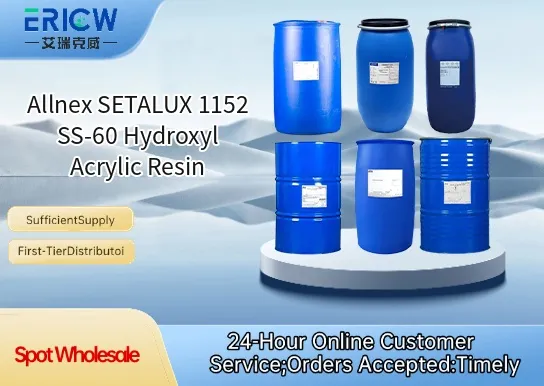
High hydroxyl functionality for excellent crosslink density with melamine and polyisocyanate curing agents.
Low VOC formulation compliant with stringent environmental regulations including EU Directive 2004/42/EC.
Outstanding gloss retention and weatherability in exterior topcoat applications.
Excellent compatibility with common acrylic, polyester, and cellulose ester resins.
Good flow and leveling characteristics for high-quality film formation.
Automotive OEM clearcoats and basecoats.
Industrial maintenance coatings for metal substrates.
General-purpose coil coatings requiring UV resistance and durability.
High-performance plastic coatings for automotive interior and exterior trim.
Powder coating hybrid systems where solution-based hydroxyl acrylics enhance film integrity.
| Chemical Type | Hydroxyl-functional acrylic copolymer |
| Product Form | Liquid resin solution |
| Appearance | Clear, pale yellow liquid |
| Solvent System | Xylene / butyl acetate blend |
| Hydroxyl Value (mg KOH/g) | 60–68 |
| Non-Volatile Content (% w/w) | 60 ± 2 |
| Acid Value (mg KOH/g) | < 5 |
| Viscosity (DIN 4, 25°C) | 10–14 s |
Q1: What is the primary function of SETALUX 1152 SS-60 in coating formulations?
A: SETALUX 1152 SS-60 is a hydroxyl-functional acrylic resin designed to serve as a reactive binder in two-component polyurethane and polyester-based coating systems. It contributes to film formation, enhances crosslink density, and supports key performance attributes such as hardness, chemical resistance, and gloss retention.
Q2: Is SETALUX 1152 SS-60 compatible with common isocyanate curing agents?
A: Yes — it is specifically formulated for compatibility with aliphatic and aromatic isocyanate crosslinkers, including HDI-based trimer and IPDI-based adducts. Optimal reactivity and pot life depend on the selected hardener, catalyst usage, and ambient processing conditions.
Q3: How does SETALUX 1152 SS-60 perform in high-solids or low-VOC formulations?
A: Its low-viscosity profile and balanced molecular weight distribution make it well-suited for high-solids applications. It enables formulators to reduce solvent content while maintaining application viscosity and film integrity, supporting compliance with evolving VOC regulations without compromising cure efficiency.
Q4: Can SETALUX 1152 SS-60 be used in UV-curable hybrid systems?
A: While not a UV-reactive resin itself, it can be incorporated into hybrid thermal/UV systems where hydroxyl groups participate in thermal post-cure steps following partial UV initiation. Compatibility must be verified experimentally due to potential interactions with photoinitiators and acrylate monomers.
Contact With Us:
E-mail: wangxingqiang@ericwchem.com
Have a Questions? Call Us:
Add:
Building A1, Jiete Industrial Park, Huangpu District, Guangzhou City, Guangdong Province, China