English
 Español
 tiếng việt
 русский
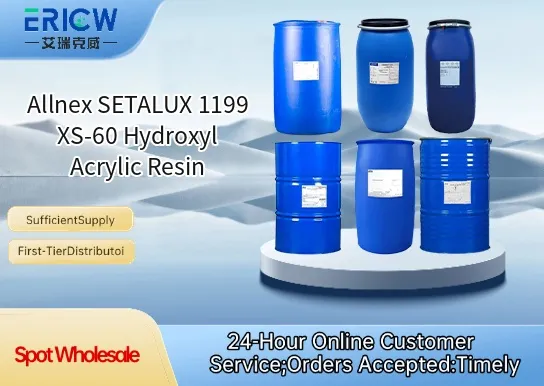
High hydroxyl functionality for excellent crosslink density with multifunctional isocyanates.
Optimized molecular weight distribution for superior flow, leveling, and gloss development.
Low VOC formulation compatible with high-solids and low-emission coating systems.
Enhanced weatherability and UV resistance due to acrylic backbone stability.
Good compatibility with common polyester, alkyd, and other acrylic resins in hybrid systems.
Automotive OEM clearcoats and basecoats requiring high durability and optical clarity.
Industrial maintenance coatings for metal substrates exposed to harsh environments.
General-purpose coil coatings demanding excellent formability and corrosion resistance.
High-performance refinish coatings where fast cure and mar resistance are critical.
Powder coating hybrids leveraging hydroxyl reactivity for improved film formation at lower bake temperatures.
| Chemical Type | Hydroxyl-functional acrylic copolymer |
| Product Form | Liquid resin solution |
| Appearance | Clear, pale yellow liquid |
| Primary Applications | Two-component polyurethane (2K PU) coatings |
| Key Features | High OH value, low viscosity, excellent solubility in common coating solvents |
| Benefits | Enables high-solids formulations, improves hardness and chemical resistance post-cure |
| Solvent System | Xylene / butyl acetate blend (typical) |
| Storage Stability | Stable for ≥12 months at 20–25°C in sealed containers |
Q1: What is the primary function of SETALUX 1199 XS-60 in coating formulations?
A: SETALUX 1199 XS-60 serves as a hydroxyl-functional acrylic resin designed to act as a reactive binder in two-component polyurethane and polyester-based systems, contributing to film formation, crosslink density, and final coating performance such as hardness, flexibility, and chemical resistance.
Q2: Is SETALUX 1199 XS-60 compatible with common isocyanate hardeners?
A: Yes, it is formulated for compatibility with standard aliphatic and aromatic isocyanate crosslinkers, including HDI trimer, IPDI biuret, and TDI-based hardeners. Optimal performance is achieved when matched with hardeners offering appropriate NCO:OH stoichiometry and cure profile alignment.
Q3: How does the low-solvent, high-solids nature of SETALUX 1199 XS-60 benefit formulation design?
A: As a high-solids, low-VOC hydroxyl acrylic resin, it supports formulators in reducing overall solvent demand while maintaining viscosity control and application properties—enabling more sustainable coatings without compromising on flow, leveling, or crosslink efficiency.
Q4: Can SETALUX 1199 XS-60 be used in both ambient- and forced-dry curing systems?
A: Yes—it is suitable for ambient-cure applications where full crosslink development occurs over time, as well as for forced-dry systems (e.g., 60–80 °C) where faster network formation and improved early hardness are required.
Contact With Us:
E-mail: wangxingqiang@ericwchem.com
Have a Questions? Call Us:
Add:
Building A1, Jiete Industrial Park, Huangpu District, Guangzhou City, Guangdong Province, China