English
 Español
 tiếng việt
 русский
High hydroxyl functionality for excellent crosslink density with melamine and polyisocyanate curing agents.
Outstanding weatherability and UV resistance, suitable for demanding exterior coatings.
Good solubility in common organic solvents including xylene, butyl acetate, and ethyl acetate.
Low viscosity enables high-solids formulation without compromising flow and leveling.
Excellent compatibility with other acrylic resins, alkyds, and cellulose derivatives.
Automotive OEM and refinish topcoats.
Industrial maintenance coatings for metal substrates.
General-purpose coil coatings requiring durability and gloss retention.
High-performance architectural metal façade coatings.
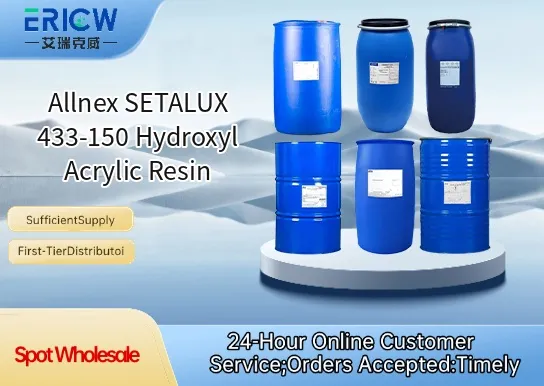
| Chemical Type | Hydroxyl-functional acrylic copolymer |
| Product Form | Liquid resin solution |
| Appearance | Clear, pale yellow liquid |
| Primary Applications | Thermoset coatings cured with melamine or isocyanate crosslinkers |
| Key Features | High OH value, low VOC potential, excellent film hardness development |
| Benefits | Enhanced chemical resistance, superior gloss and color stability, good substrate adhesion |
| Solvent System | Aromatic and ester-based (e.g., xylene/butyl acetate blend) |
Q1: What is the primary function of SETALUX 433-150 in coating formulations?
A: SETALUX 433-150 serves as a hydroxyl-functional acrylic resin designed to act as a reactive binder in two-component polyurethane (2K PU) and other crosslinking systems. It contributes to film formation, enhances hardness and chemical resistance, and supports excellent gloss and clarity in high-performance topcoats.
Q2: Is SETALUX 433-150 compatible with common polyisocyanate crosslinkers?
A: Yes — it is formulated for compatibility with standard aliphatic polyisocyanates, including HDI-based trimer and biuret types. Optimal performance is achieved when matched with low-viscosity, non-yellowing crosslinkers intended for ambient or forced-dry applications.
Q3: How does SETALUX 433-150 perform in terms of weathering and UV stability?
A: As a purely acrylic, aliphatic hydroxyl resin, it offers inherent resistance to UV degradation and yellowing. When cured with suitable aliphatic isocyanates, it delivers long-term gloss retention and color stability in exterior architectural and industrial maintenance coatings.
Q4: Can SETALUX 433-150 be used in low-VOC or high-solids coating systems?
A: Yes — its relatively low solution viscosity and balanced molecular weight profile support formulation in high-solids 2K PU systems. It enables VOC reduction without compromising pot life or film properties, especially when paired with reactive diluents or low-VOC solvent blends.
Q5: What are key handling and storage recommendations for this resin?
A: Store in tightly sealed containers at temperatures between 10–30 °C, away from direct sunlight and moisture. Avoid prolonged exposure to humidity during handling, as hydroxyl functionality may react with atmospheric water over time. Always follow Allnex’s Safety Data Sheet for safe use and disposal.
Contact With Us:
E-mail: wangxingqiang@ericwchem.com
Have a Questions? Call Us:
Add:
Building A1, Jiete Industrial Park, Huangpu District, Guangzhou City, Guangdong Province, China