English
 Español
 tiếng việt
 русский
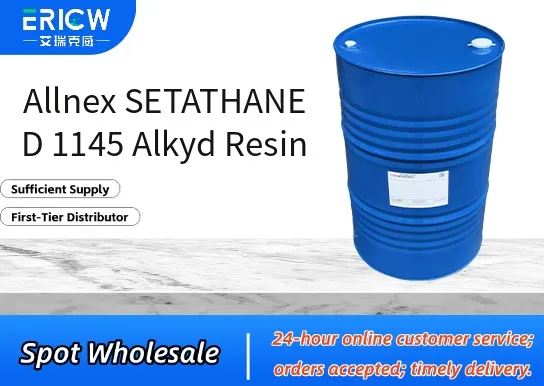
High-solids, medium-oil alkyd resin offering excellent flow and leveling in solventborne coatings.
Designed for fast ambient cure with good through-dry performance and low VOC content.
Delivers outstanding gloss retention and resistance to yellowing upon aging and UV exposure.
Compatible with common nitrocellulose, acrylic, and melamine crosslinkers for hybrid formulations.
Provides balanced hardness development and flexibility, supporting both decorative and protective finishes.
Automotive refinish topcoats and clearcoats.
Industrial maintenance coatings for metal substrates.
General-purpose decorative wood finishes (e.g., furniture, cabinetry).
Marine and rail OEM and aftermarket coatings.
Architectural metal cladding and façade systems.
| Chemical Type | Medium-oil alkyd resin (soya oil modified) |
| Product Form | Liquid solution in aromatic hydrocarbons (e.g., xylene, Solvesso™ 100) |
| Appearance | Clear, pale yellow to amber liquid |
| Solids Content (wt%) | ~60–65% |
| Viscosity (25°C, Brookfield RV, spindle #4, 20 rpm) | ~8,000–12,000 cP |
| Acid Value (mg KOH/g) | 6–10 |
| Density (20°C, g/cm³) | ~0.94–0.97 |
| Flash Point (Tag Closed Cup) | ~35–45°C |
Q1: What is the primary function of SETATHANE D 1145 in coating formulations?
A: SETATHANE D 1145 is a reactive alkyd resin designed to act as a crosslinker and performance modifier in two-component polyurethane and hybrid systems. It enhances film hardness, flexibility balance, chemical resistance, and gloss retention without requiring high-temperature curing.
Q2: Is SETATHANE D 1145 compatible with common polyisocyanate hardeners?
A: Yes — it is formulated for compatibility with standard aliphatic and aromatic isocyanates, including HDI-based trimer and IPDI-based prepolymers. Compatibility should be verified in the final formulation due to sensitivity to moisture, catalysts, and solvent blends.
Q3: How does SETATHANE D 1145 influence pot life and cure speed in 2K PU systems?
A: As a hydroxyl-functional alkyd, it contributes moderate reactivity — typically extending pot life compared to highly reactive polyester polyols while still supporting ambient or forced-dry cure profiles. Cure speed depends on isocyanate selection, catalyst use, and ambient conditions.
Q4: Can SETATHANE D 1145 be used in high-solids or low-VOC coatings?
A: Yes — its relatively low viscosity and good solubility in common oxygenated solvents and reactive diluents make it suitable for high-solids formulations. It supports VOC reduction strategies when combined with appropriate solvent selections and resin blends.
Q5: What are typical handling and storage recommendations for this resin?
A: Store in tightly sealed containers under dry, cool conditions (below 30°C) and protect from moisture and direct sunlight. Prolonged exposure to humidity may lead to viscosity increase or gelation. Always follow Allnex’s Safety Data Sheet for safe handling and disposal.
Contact With Us:
E-mail: wangxingqiang@ericwchem.com
Have a Questions? Call Us:
Add:
Building A1, Jiete Industrial Park, Huangpu District, Guangzhou City, Guangdong Province, China