English
 Español
 tiếng việt
 русский
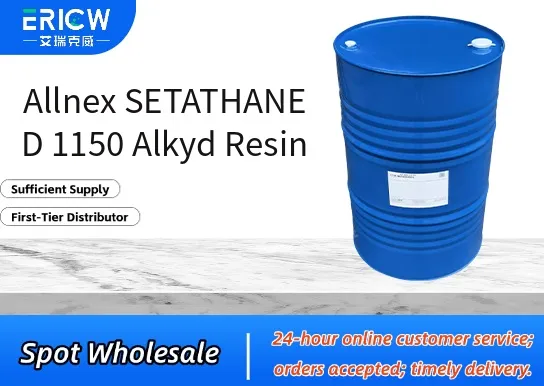
High-solids, low-VOC alkyd resin designed for sustainable coating formulations.
Excellent compatibility with acrylics, polyurethanes, and other common co-resins.
Delivers superior gloss retention and long-term weather resistance in exterior applications.
Offers balanced drying performance—fast initial set with full through-cure.
Enhanced flexibility and impact resistance without compromising hardness development.
Architectural maintenance coatings for metal and concrete substrates.
Industrial maintenance coatings for bridges, tanks, and structural steel.
Marine topcoats requiring durable UV and moisture resistance.
General-purpose protective coatings for agricultural and construction equipment.
Refinish coatings for OEM-authorized repair systems.
| Chemical Type | Long-oil modified alkyd resin |
| Product Form | Liquid |
| Appearance | Clear to pale yellow viscous liquid |
| Solvent | Xylene / aromatic hydrocarbon blend |
| Solids Content (wt%) | 60 ± 2% |
| Viscosity (mPa·s at 25°C) | 3,000 – 5,000 |
| Acid Value (mg KOH/g) | 8 – 12 |
| Density (g/cm³ at 20°C) | 0.98 – 1.02 |
Q1: What is the primary function of SETATHANE D 1150 in alkyd-based coatings?
A: SETATHANE D 1150 is a reactive diluent and viscosity modifier designed to reduce formulation viscosity without sacrificing film integrity or drying performance. It functions as a non-volatile co-reactive component that integrates into the alkyd network during cure, supporting improved flow, leveling, and substrate wetting.
Q2: Is SETATHANE D 1150 compatible with conventional air-drying alkyds and modified alkyd systems?
A: Yes, it exhibits broad compatibility with short- to medium-oil alkyd resins, including cobalt-free and low-VOC formulations. It also performs well in hybrid systems incorporating acrylics, melamines, or polyurethane crosslinkers, though compatibility testing under specific formulation conditions is recommended.
Q3: How does SETATHANE D 1150 affect drying time and hardness development?
A: It supports efficient oxidative drying and contributes to balanced through-cure, typically maintaining or slightly accelerating surface dry while promoting consistent hardness build over time. Its reactivity helps avoid the softening or retardation sometimes associated with non-reactive diluents.
Q4: Can SETATHANE D 1150 be used in high-solids or solvent-reduced alkyd coatings?
A: Yes — it is specifically formulated for use in high-solids alkyd systems where viscosity control is critical. Its low volatility and reactive nature support VOC reduction strategies while helping maintain application properties and film performance.
Contact With Us:
E-mail: wangxingqiang@ericwchem.com
Have a Questions? Call Us:
Add:
Building A1, Jiete Industrial Park, Huangpu District, Guangzhou City, Guangdong Province, China