English
 Español
 tiếng việt
 русский
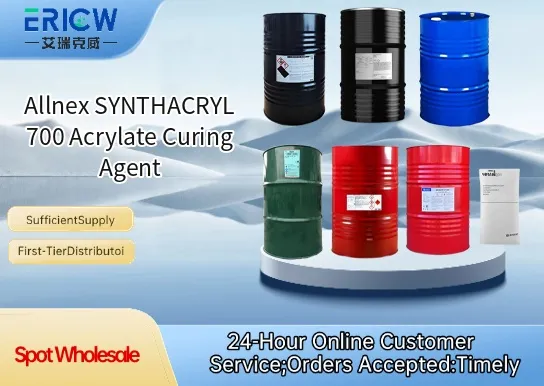
Highly reactive multifunctional acrylate designed for rapid UV/EB curing.
Excellent compatibility with common acrylic monomers and oligomers.
Delivers superior hardness, chemical resistance, and adhesion in cured films.
Low volatility and minimal odor, supporting safer handling and lower VOC formulations.
Consistent batch-to-batch performance validated under strict Allnex quality control.
UV-curable wood coatings for furniture and flooring.
Industrial metal coatings requiring high mar and solvent resistance.
Plastic coatings for automotive interior trim and electronics housings.
Screen and inkjet inks demanding fast cure speed and excellent gloss retention.
3D printing resins where dimensional stability and surface hardness are critical.
| Chemical Type | Multifunctional acrylate monomer |
| Product Form | Liquid |
| Appearance | Colorless to pale yellow clear liquid |
| Primary Applications | UV/EB-curable coatings, inks, and adhesives |
| Key Features | High reactivity, low shrinkage, excellent film formation |
| Benefits | Enhanced crosslink density, improved scratch resistance, reduced energy consumption during cure |
| Storage Conditions | Store below 30°C, protect from light and moisture |
| Shelf Life | 12 months from date of manufacture when stored properly |
Q1: What is the primary function of SYNTHACRYL 700 in UV-curable systems?
A: SYNTHACRYL 700 is a multifunctional acrylate-based curing agent designed to enhance crosslink density, improve surface hardness, and accelerate photopolymerization in UV- and EB-curable coatings, inks, and adhesives.
Q2: Is SYNTHACRYL 700 compatible with common UV monomers and oligomers?
A: Yes — it exhibits broad compatibility with standard acrylate monomers (e.g., TMPTA, HDDA) and urethane, epoxy, and polyester acrylate oligomers, supporting formulation flexibility across industrial coating and printing applications.
Q3: How does SYNTHACRYL 700 influence film properties such as flexibility and chemical resistance?
A: As a rigid, highly functional acrylate, it contributes to improved chemical resistance and surface durability; however, its incorporation level should be balanced with more flexible monomers or oligomers to maintain acceptable substrate adhesion and bendability.
Q4: What safety and handling considerations apply to SYNTHACRYL 700?
A: Like many reactive acrylates, it may cause skin and eye irritation. Users should follow good industrial hygiene practices — including wearing nitrile gloves, safety goggles, and adequate ventilation — and consult the Safety Data Sheet (SDS) prior to handling or formulation.
Contact With Us:
E-mail: wangxingqiang@ericwchem.com
Have a Questions? Call Us:
Add:
Building A1, Jiete Industrial Park, Huangpu District, Guangzhou City, Guangdong Province, China