English
 Español
 tiếng việt
 русский
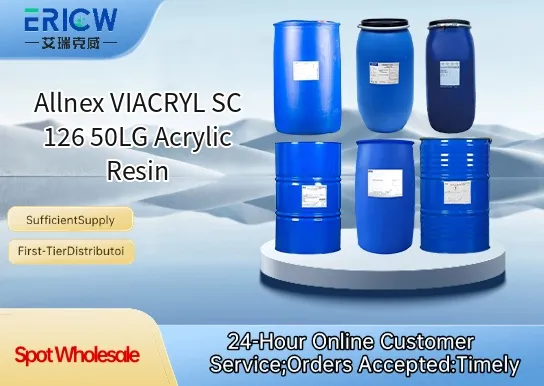
High-solids, low-VOC acrylic dispersion for sustainable coating formulations.
Excellent pigment wetting and dispersion stability in waterborne systems.
Good film formation at ambient temperature with balanced hardness and flexibility.
Enhanced compatibility with common crosslinkers including melamine and polyisocyanates.
Consistent batch-to-batch reproducibility meeting stringent industrial quality standards.
Industrial maintenance coatings for metal substrates.
Waterborne coil coatings requiring durable corrosion resistance.
General-purpose architectural and decorative topcoats.
Plastic coatings for ABS and PC substrates in automotive interiors.
Low-temperature baking OEM finishes for appliances and office furniture.
| Chemical Type | Acrylic copolymer dispersion |
| Product Form | Aqueous dispersion |
| Appearance | Opaque white liquid |
| Solids Content (wt%) | 50 ± 1% |
| pH | 7.5 – 8.5 |
| Viscosity (mPa·s, Brookfield RVT, #2 spindle, 20 rpm) | 100 – 300 |
| Density (g/cm³, 25°C) | 1.02 – 1.05 |
| Particle Size (D50, nm) | 120 – 180 |
Q1: What is the primary application of VIACRYL SC 126 50LG in industrial coatings?
A: VIACRYL SC 126 50LG is a waterborne acrylic resin designed primarily as a rheology modifier and film-forming aid in high-solids and low-VOC industrial maintenance and protective coatings, especially where improved sag resistance, leveling, and early water resistance are required.
Q2: Is VIACRYL SC 126 50LG compatible with common waterborne resins and crosslinkers?
A: Yes — it demonstrates good compatibility with a broad range of waterborne acrylics, polyurethanes, and epoxy dispersions, and can be used alongside common ambient-cure or heat-activated crosslinkers such as aziridines, carbodiimides, or melamine formaldehydes, depending on formulation goals.
Q3: How should VIACRYL SC 126 50LG be incorporated into a coating formulation?
A: It is typically added during the let-down stage, after pigment grinding, under moderate agitation. Pre-dilution with water or co-solvent may be used to ensure uniform dispersion. Avoid high-shear mixing post-addition to preserve its associative thickening functionality.
Q4: Does VIACRYL SC 126 50LG contribute to final film properties beyond rheology control?
A: Yes — in addition to its role as a rheology modifier, it enhances film integrity, improves substrate wetting, and contributes to better block resistance and reduced surface tack in dried films, particularly in high-pigment-volume-concentration systems.
Contact With Us:
E-mail: wangxingqiang@ericwchem.com
Have a Questions? Call Us:
Add:
Building A1, Jiete Industrial Park, Huangpu District, Guangzhou City, Guangdong Province, China