English
 Español
 tiếng việt
 русский
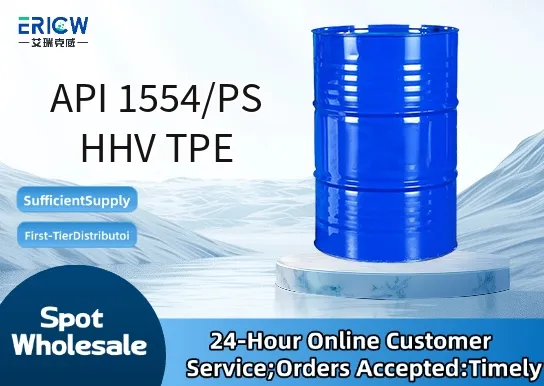
High heat resistance with continuous service temperature up to 120°C.
Excellent oil and fuel resistance, meeting ASTM D471 requirements for Type B elastomers.
Good compression set retention after prolonged thermal aging at elevated temperatures.
Enhanced processability via injection molding and extrusion without plasticizer migration.
Halogen-free formulation compliant with RoHS and REACH restricted substance directives.
Under-hood automotive seals and gaskets exposed to engine oil and coolant.
Fuel system components including fuel rail covers and injector boots.
Industrial hydraulic hose linings requiring hydrocarbon compatibility.
High-temperature wire and cable jacketing for automotive and energy sectors.
Reusable medical device housings requiring steam sterilization stability.
| Chemical Type | Thermoplastic Elastomer (TPE) – Styrenic Block Copolymer (SBC) modified with hydrogenated polybutadiene |
| Product Form | Pellets |
| Appearance | Off-white to light tan, free-flowing granules |
| Hardness (Shore A) | 85 ± 3 |
| Tensile Strength (ASTM D412) | 18 MPa (min) |
| Elongation at Break (ASTM D412) | 450% (min) |
| Density (ASTM D792) | 0.98 g/cm³ |
| Melt Flow Rate (200°C/5 kg) | 12 g/10 min |
Q1: What is the primary functional role of API 1554/PS HHV TPE in polymer formulations?
A: API 1554/PS HHV TPE functions as a high-performance processing aid and melt-flow modifier, particularly for styrenic thermoplastic elastomers and related compound systems. It enhances melt homogeneity, reduces extrusion torque, and supports consistent dispersion of fillers and additives during compounding.
Q2: Is API 1554/PS HHV TPE compatible with common engineering thermoplastics beyond styrenics?
A: Yes — it demonstrates broad compatibility with polycarbonate (PC), ABS, PC/ABS blends, and certain polyolefin-based TPEs. Compatibility should be verified empirically in the target matrix, as performance may vary depending on thermal history, shear profile, and formulation complexity.
Q3: How does API 1554/PS HHV TPE affect final part aesthetics and surface quality?
A: When properly incorporated, it contributes to improved surface finish and reduced flow lines or weld line visibility in injection-molded parts. Its low-volatility, high-temperature-stable structure helps minimize bloom, haze, or die drool under typical processing conditions.
Q4: What are the recommended handling and storage conditions?
A: Store in original sealed packaging at temperatures below 40 °C and away from direct sunlight or sources of prolonged heat. Keep containers dry and tightly closed to prevent moisture absorption and potential agglomeration during handling.
Contact With Us:
E-mail: wangxingqiang@ericwchem.com
Have a Questions? Call Us:
Add:
Building A1, Jiete Industrial Park, Huangpu District, Guangzhou City, Guangdong Province, China