English
 Español
 tiếng việt
 русский
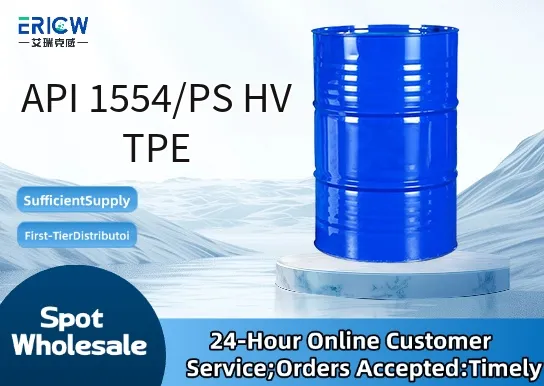
High-voltage electrical insulation performance compliant with IEC 60587 and ASTM D2303 standards.
Excellent thermal stability up to 125°C continuous service temperature (UL RTI Electrical).
Halogen-free, low-smoke, and flame-retardant formulation meeting UL 94 V-0 rating at 1.6 mm.
Superior flexibility and resilience over wide temperature range (-40°C to +125°C).
Good processability via extrusion and injection molding without pre-drying.
Insulation for medium-voltage power cables (1–35 kV).
Jacketing material for renewable energy cabling in solar PV and wind turbine systems.
Sealing and gasketing components in electric vehicle charging infrastructure.
Protective sheathing for industrial control and automation wiring.
Extruded profiles for rail traction and signaling cable assemblies.
| Chemical Type | Thermoplastic Elastomer (TPE), Polyolefin-based |
| Product Form | Pellets |
| Appearance | Off-white to light beige, free-flowing granules |
| Primary Applications | High-voltage wire & cable insulation and jacketing |
| Key Features | Halogen-free, flame-retardant, UV-stabilized, high dielectric strength |
| Benefits | Reduced fire hazard, recyclable processing, RoHS and REACH compliant |
| Density (ASTM D792) | 1.18–1.22 g/cm³ |
| Hardness (Shore A, ASTM D2240) | 85–90 |
Q1: What is API 1554/PS HV TPE primarily used for?
A: API 1554/PS HV TPE is a high-viscosity thermoplastic elastomer designed for compounding into specialized polymer blends—particularly where enhanced melt strength, thermal stability, and compatibility with polyolefins or styrenic matrices are required. It is commonly employed in demanding extrusion and injection molding applications involving functional masterbatches, soft-touch overmolding, and engineered sealants.
Q2: Is API 1554/PS HV TPE compatible with common base resins like PP, PE, or PS?
A: Yes—it exhibits good compatibility with polypropylene (PP), polyethylene (PE), and general-purpose polystyrene (GPPS), especially when used as a compatibilizer or viscosity modifier. Optimal dispersion typically requires standard melt processing conditions and may benefit from controlled shear history during compounding.
Q3: How should API 1554/PS HV TPE be processed in industrial compounding lines?
A: It is supplied in pellet form and processes readily using conventional twin-screw extruders. Recommended drying is not typically required under ambient storage conditions, but pre-drying at 60–70 °C for 2–4 hours is advised if material has been exposed to high humidity. Melt temperature range generally falls between 180 °C and 230 °C, depending on the host polymer and desired rheological profile.
Q4: Does API 1554/PS HV TPE meet regulatory requirements for food-contact or medical applications?
A: API 1554/PS HV TPE is formulated without intentionally added heavy metals, phthalates, or primary aromatic amines. However, final regulatory compliance depends on the full formulation, processing conditions, and end-use application. Customers intending use in regulated sectors must conduct full system-level testing and verification per applicable regional requirements.
Contact With Us:
E-mail: wangxingqiang@ericwchem.com
Have a Questions? Call Us:
Add:
Building A1, Jiete Industrial Park, Huangpu District, Guangzhou City, Guangdong Province, China