English
 Español
 tiếng việt
 русский
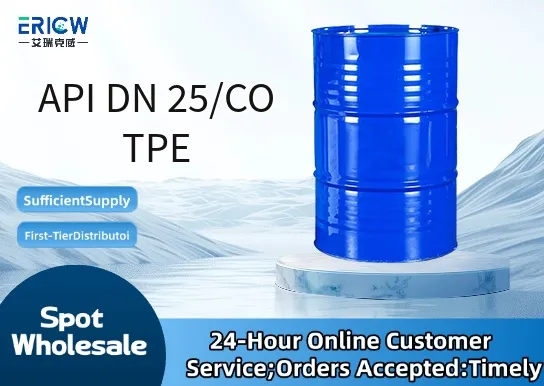
Thermoplastic elastomer (TPE) formulation with excellent compression set resistance for long-term sealing performance.
Halogen-free and RoHS-compliant, supporting sustainable manufacturing and regulatory compliance in global markets.
Optimized processability for injection molding and extrusion, enabling high-volume production with low cycle times.
Superior chemical resistance to oils, greases, and mild aqueous solutions commonly encountered in industrial environments.
Consistent dimensional stability across a wide service temperature range of –40 °C to +100 °C.
Sealing components for pneumatic and hydraulic connectors in industrial automation systems.
O-rings and gaskets for instrumentation and control valves in oil & gas and chemical processing plants.
Dynamic seals in rotating and reciprocating equipment requiring low friction and high resilience.
Custom-molded interface parts for modular piping assemblies compliant with ISO 8531 and DIN EN 1515 standards.
Replacement material for traditional EPDM or NBR in applications demanding enhanced flexibility and recyclability.
| Chemical Type | Thermoplastic Elastomer (TPE), styrenic block copolymer (SEBS)-based |
| Product Form | Pellets, free-flowing, uniform size distribution |
| Appearance | Off-white to light beige, non-dusty, surface-smooth pellets |
| Primary Applications | Static and dynamic seals for DN 25 (1-inch) flanged and threaded connections |
| Key Features | Low compression set (<25% @ 70 °C, 22 hrs), high elasticity (>400% elongation) |
| Benefits | Reduced maintenance frequency, extended service life, compatibility with standard TPE processing equipment |
| Regulatory Compliance | RoHS 2011/65/EU, REACH SVHC-free, FDA extractables tested (non-food contact grade) |
| Storage Conditions | Store in dry, cool conditions (<30 °C); protect from UV exposure and moisture |
Q1: What is the primary function of API DN 25/CO TPE in polymer formulations?
A: API DN 25/CO TPE functions as a thermoplastic elastomer modifier, enhancing flexibility, impact resistance, and melt processability in polyolefin- and styrenic-based compounds—particularly where soft-touch feel and dynamic mechanical performance are required.
Q2: Is API DN 25/CO TPE compatible with common food-contact or medical-grade polymers?
A: It demonstrates good compatibility with FDA-compliant polypropylene, polyethylene, and certain SEBS-based systems. However, final regulatory compliance depends on the full formulation, processing conditions, and end-use application—users must conduct their own suitability and migration assessments.
Q3: How should API DN 25/CO TPE be processed during compounding?
A: It is typically melt-blended using standard twin-screw extruders at temperatures between 160–210 °C, depending on the base polymer matrix. Pre-drying is generally not required, though storage under low-humidity conditions is recommended to maintain optimal flow characteristics.
Q4: Can API DN 25/CO TPE be used in overmolding applications?
A: Yes—it is widely employed in two-shot and multi-material injection molding processes, especially for soft-touch overmolding onto rigid PP, ABS, or PC substrates, owing to its balanced adhesion, thermal stability, and surface finish consistency.
Contact With Us:
E-mail: wangxingqiang@ericwchem.com
Have a Questions? Call Us:
Add:
Building A1, Jiete Industrial Park, Huangpu District, Guangzhou City, Guangdong Province, China