English
 Español
 tiếng việt
 русский
Soft-touch, skin-friendly surface finish with excellent tactile comfort.
Outstanding adhesion to polypropylene (PP) and polyethylene (PE) substrates without primer.
Good resistance to UV exposure and long-term weathering under outdoor conditions.
Low-temperature flexibility down to –40 °C with retained elasticity.
RoHS-compliant and free of heavy metals, phthalates, and halogens.
Overmolding for automotive interior trim components (e.g., door handles, control knobs).
Consumer electronics housings requiring soft-grip surfaces (e.g., power tools, remote controls).
Household appliance grips and ergonomic interfaces (e.g., vacuum cleaners, kitchen appliances).
Medical device accessories requiring biocompatibility-supporting materials (non-implantable).
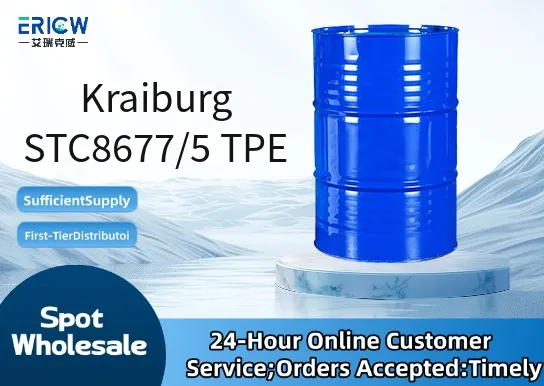
| Chemical Type | Thermoplastic Elastomer (TPE), SEBS-based |
| Product Form | Pellets |
| Appearance | Translucent, light amber granules |
| Hardness (Shore A) | 65 ± 3 |
| Density (g/cm³) | 0.91 ± 0.01 |
| Melt Flow Rate (230 °C/2.16 kg) | 12–18 g/10 min |
| Primary Applications | Two-component injection molding over PP/PE |
| Key Features | Soft-touch, substrate-adhesive, weather-resistant |
Q1: What is the primary function of STC8677/5 in TPE formulations?
A: STC8677/5 is a specialized thermoplastic elastomer (TPE) additive designed to enhance melt processability and improve surface finish in extruded or injection-molded TPE compounds, particularly those based on SEBS or TPE-S systems.
Q2: Is STC8677/5 compatible with common polymer matrices used in soft-touch applications?
A: Yes — it demonstrates good compatibility with styrenic block copolymers (e.g., SEBS, SBS), thermoplastic polyolefins (TPOs), and certain functionalized polyolefin blends commonly employed in soft-touch overmolding and grip applications.
Q3: How should STC8677/5 be incorporated into a TPE compound?
A: It is typically introduced during the compounding stage via twin-screw extrusion, either as a masterbatch or in dry-blend form. Pre-drying is not generally required, but handling under low-humidity conditions is recommended to maintain consistent dispersion.
Q4: Does STC8677/5 affect the mechanical properties of the final TPE part?
A: At typical use levels, it maintains the base compound’s tensile strength and elongation while often improving flex fatigue resistance and reducing surface tack — effects that depend on overall formulation balance and processing conditions.
Contact With Us:
E-mail: wangxingqiang@ericwchem.com
Have a Questions? Call Us:
Add:
Building A1, Jiete Industrial Park, Huangpu District, Guangzhou City, Guangdong Province, China