English
 Español
 tiếng việt
 русский
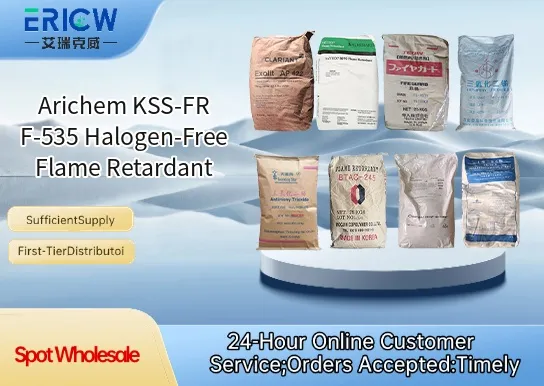
Phosphorus-nitrogen synergistic intumescent system delivering excellent flame retardancy without halogens or heavy metals.
Low smoke and low toxicity emissions during combustion, meeting stringent environmental and safety standards (e.g., UL 94 V-0, EN 45545-2).
Good thermal stability up to 280 °C, enabling compatibility with common engineering thermoplastics processing conditions.
Excellent dispersion and compatibility in polyolefins, polyesters, and polyamides—minimizing impact on mechanical properties.
RoHS-compliant and REACH-conformant, supporting global regulatory requirements for electronics and transportation sectors.
Wire and cable jacketing materials for data communication and building infrastructure.
Interior components in rail vehicles and buses requiring EN 45545-2 compliance.
Housing and structural parts for consumer electronics and office equipment.
Flame-retarded polypropylene (PP) and polyethylene (PE) compounds for automotive under-hood applications.
Thermoplastic elastomer (TPE) formulations used in flexible fire-safe seals and gaskets.
| Chemical Type | Phosphorus-nitrogen-based intumescent flame retardant |
| Product Form | Free-flowing white to off-white granular powder |
| Appearance | Uniform granules, no visible dust or agglomerates |
| Density (g/cm³) | 1.35–1.45 |
| Melting Range (°C) | 260–285 (decomposition onset) |
| Moisture Content (wt%) | ≤ 0.3 |
| pH (1% aqueous suspension) | 6.5–7.5 |
| Key Regulatory Status | RoHS 2 compliant; SVHC-free per REACH Annex XIV |
Q1: What types of polymers is KSS-FR F-535 compatible with?
A: KSS-FR F-535 is specifically engineered for use in engineering thermoplastics such as polyamide (PA6, PA66), polybutylene terephthalate (PBT), and polycarbonate blends. It demonstrates good dispersion and thermal stability during standard melt-processing conditions.
Q2: How does KSS-FR F-535 achieve flame retardancy without halogens?
A: It functions primarily through an intumescent mechanism—promoting the formation of a protective, carbon-rich char layer upon exposure to heat or flame. This char acts as a physical barrier, insulating the underlying polymer and reducing heat feedback and volatile release.
Q3: Does KSS-FR F-535 affect mechanical properties or surface appearance?
A: When properly compounded, it generally maintains good retention of tensile strength and impact performance in host resins. Surface aesthetics—including gloss and color stability—are typically well preserved, especially at recommended dosage levels.
Q4: Is KSS-FR F-535 suitable for applications requiring regulatory compliance with RoHS or REACH?
A: Yes—KSS-FR F-535 is formulated without restricted halogenated compounds, heavy metals, or substances of very high concern (SVHCs) listed under current REACH candidate lists. It aligns with RoHS Directive requirements for brominated and chlorinated flame retardants.
Q5: What is the typical dosage range for effective flame retardancy?
A: Effective performance is usually achieved at relatively low loadings, generally ranging from 0.1% to 2% by weight depending on the base polymer, required fire classification, and processing method. Optimal dosage should be determined via formulation trials under end-use conditions.
Contact With Us:
E-mail: wangxingqiang@ericwchem.com
Have a Questions? Call Us:
Add:
Building A1, Jiete Industrial Park, Huangpu District, Guangzhou City, Guangdong Province, China