English
 Español
 tiếng việt
 русский
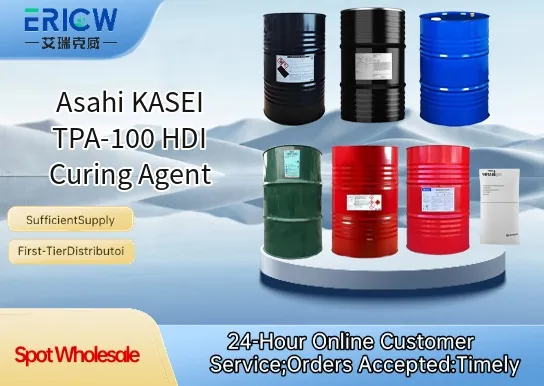
High-performance aliphatic polyisocyanate based on hexamethylene diisocyanate (HDI) trimer chemistry.
Excellent weather resistance and UV stability, ensuring long-term gloss and color retention in coatings.
Low viscosity and good compatibility with common hydroxyl-functional resins including acrylics and polyesters.
Non-yellowing characteristics suitable for clearcoats and topcoat applications requiring optical clarity.
Controlled reactivity enabling balanced pot life and film formation at ambient or low-bake conditions.
Automotive OEM clearcoats and refinish topcoats.
Industrial maintenance coatings for architectural metal and façade systems.
High-end wood finishing coatings for furniture and interior joinery.
Plastic coatings for automotive interior trim and consumer electronics housings.
General-purpose two-component polyurethane protective coatings for machinery and equipment.
| Chemical Type | HDI-based aliphatic isocyanurate trimer |
| Product Form | Liquid |
| Appearance | Colorless to pale yellow transparent liquid |
| NCO Content (wt%) | Approx. 18.5–19.5% |
| Viscosity (25°C, mPa·s) | 800–1,200 |
| Density (20°C, g/cm³) | 1.16–1.19 |
| Flash Point (PMCC, °C) | 125–135 |
| Storage Stability | Stable under dry, cool conditions (≤30°C); protect from moisture |
Q1: What is the primary function of TPA-100 in coating and adhesive formulations?
A: TPA-100 is a blocked aliphatic polyisocyanate curing agent based on hexamethylene diisocyanate (HDI), designed to provide excellent weather resistance, gloss retention, and mechanical durability upon thermal activation. It enables one-component (1K) formulation stability while delivering high-performance crosslinking in baked systems.
Q2: At what temperature range does TPA-100 typically deblock and react with hydroxyl-functional resins?
A: Deblocking and crosslinking generally initiate above 120 °C, with full reactivity achieved within typical industrial baking schedules at 140–180 °C. The exact onset and rate depend on resin chemistry, catalyst presence, and film thickness.
Q3: Is TPA-100 compatible with common hydroxyl-functional acrylics, polyesters, and polyurethanes?
A: Yes — TPA-100 demonstrates broad compatibility with standard hydroxyl-terminated resins used in industrial and automotive coatings. It is especially valued for its low viscosity and good solubility in common organic solvents, facilitating homogeneous blending without premature gelation.
Q4: How should TPA-100 be stored to maintain long-term stability?
A: Store in tightly sealed original containers under dry, cool conditions (below 30 °C) and away from moisture, strong acids, or amines. Prolonged exposure to humidity or elevated temperatures may lead to partial deblocking or viscosity increase over time.
Contact With Us:
E-mail: wangxingqiang@ericwchem.com
Have a Questions? Call Us:
Add:
Building A1, Jiete Industrial Park, Huangpu District, Guangzhou City, Guangdong Province, China