English
 Español
 tiếng việt
 русский
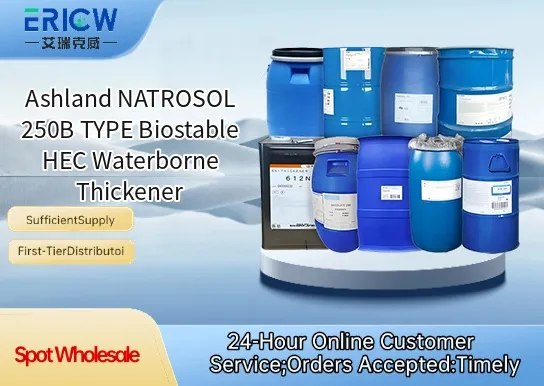
Biostable formulation eliminates the need for additional isothiazolinone or formaldehyde-releasing preservatives in waterborne systems.
Delivers excellent mid-shear viscosity building and outstanding sag resistance in architectural coatings and industrial finishes.
Provides superior compatibility with anionic surfactants, pigments, and common co-thickeners including associative HEUR thickeners.
Offers consistent rheology performance across a broad pH range (pH 3–12) and maintains stability under freeze-thaw cycling.
Enables high gloss retention and low spatter during roller and spray application without compromising film integrity.
Architectural interior and exterior flat, eggshell, and satin latex paints.
Waterborne industrial maintenance coatings for metal and concrete substrates.
Low-VOC and zero-VOC decorative wall coatings and primers.
Water-based wood stains and clear finishes requiring non-drip rheology control.
Textile printing pastes and construction adhesives requiring shear-thinning behavior.
| Chemical Type | Hydroxyethyl cellulose (HEC), biostable grade |
| Product Form | Free-flowing white to off-white granular powder |
| Appearance | Free-flowing granules, no visible lumps or discoloration |
| Primary Applications | Waterborne architectural coatings, industrial finishes, adhesives, and specialty dispersions |
| Key Features | Non-ionic, biostable, high molecular weight, cold-water dispersible |
| Benefits | Preservative-free formulation support, excellent viscosity efficiency, low foaming, good leveling |
| pH of 1% Aqueous Solution (25°C) | 6.0 – 8.5 |
| Viscosity (Brookfield RVT, 2% solution, spindle #3, 20 rpm, 25°C) | 18,000 – 22,000 cP |
Q1: What makes NATROSOL 250B TYPE “biostable”, and how does it differ from standard HEC thickeners?
A: NATROSOL 250B TYPE incorporates a proprietary biostabilization technology that significantly enhances resistance to microbial degradation in waterborne formulations—without requiring additional biocides in many cases. Unlike conventional hydroxyethyl cellulose (HEC), this grade maintains viscosity stability and rheological performance over extended storage periods under typical manufacturing and ambient conditions.
Q2: How should NATROSOL 250B TYPE be dispersed and hydrated in waterborne systems?
A: For optimal dispersion, gradual addition with high-shear mixing is recommended—either as a dry powder into the aqueous phase or via pre-dispersion in a water-miscible liquid carrier (e.g., propylene glycol). Hydration typically completes within minutes under moderate agitation; full viscosity development may require several hours at ambient temperature, depending on formulation pH and ionic content.
Q3: Is NATROSOL 250B TYPE compatible with common co-thickeners and rheology modifiers used in architectural coatings?
A: Yes—it demonstrates good compatibility with associative thickeners (e.g., HEUR, HASE), inorganic thickeners (e.g., bentonite clays), and other cellulose ethers when used in balanced formulations. Synergistic effects on sag resistance and spatter control are often observed, though compatibility testing is advised for specific combinations and shear profiles.
Q4: Does NATROSOL 250B TYPE exhibit sensitivity to electrolytes or pH shifts in formulated systems?
A: Like most non-ionic cellulose ethers, it maintains reasonable viscosity stability across a broad pH range (approximately 3–11) and shows moderate tolerance to low-to-moderate electrolyte levels. However, significant salt concentrations—especially multivalent ions—may reduce thickening efficiency; formulation adjustments or supplemental stabilization may be needed in highly ionic systems.
Contact With Us:
E-mail: wangxingqiang@ericwchem.com
Have a Questions? Call Us:
Add:
Building A1, Jiete Industrial Park, Huangpu District, Guangzhou City, Guangdong Province, China