English
 Español
 tiếng việt
 русский
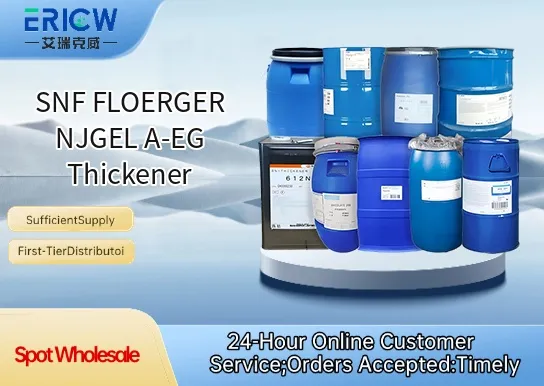
Non-ionic, ethoxylated polyurethane-based associative thickener for precise rheology control.
Delivers excellent viscosity build and shear-thinning behavior in waterborne systems.
Provides outstanding compatibility with anionic surfactants and common co-binders.
Enhances sag resistance and leveling performance without compromising gloss or clarity.
Stable across a broad pH range (pH 4–12) and tolerant to moderate electrolyte levels.
Architectural interior and exterior latex paints.
Waterborne industrial maintenance coatings.
Acrylic-based decorative plasters and textured finishes.
Low-VOC and zero-VOC formulation systems.
Emulsion-based tile adhesives and grouts.
| Chemical Type | Ethoxylated polyurethane associative thickener |
| Product Form | Off-white to light yellow viscous liquid |
| Appearance | Homogeneous, slightly opalescent liquid |
| Primary Applications | Waterborne architectural and industrial coatings |
| Key Features | Non-ionic, low-foaming, high-efficiency thickening |
| Benefits | Improved brushability, spatter resistance, and film integrity |
| pH Range (as supplied) | 6.0 – 8.0 |
| Storage Temperature | 5–35 °C; protect from freezing |
Q1: What is the primary function of NJGEL A-EG Thickener in industrial formulations?
A: NJGEL A-EG Thickener is a high-performance associative thickener designed to provide efficient rheology control, improved suspension stability, and enhanced sag resistance in water-based systems—particularly in construction chemicals such as tile adhesives, grouts, and renders.
Q2: Is NJGEL A-EG compatible with common cementitious and polymer-modified systems?
A: Yes, NJGEL A-EG demonstrates broad compatibility with Portland cement, calcium aluminate cements, redispersible polymer powders (RDP), and various cellulose ethers, making it suitable for use in both conventional and advanced dry-mix mortars.
Q3: How does NJGEL A-EG differ from conventional non-ionic thickeners like HEC or MHPC?
A: Unlike standard cellulose ethers, NJGEL A-EG functions via associative thickening—forming transient hydrophobic networks in solution—which delivers superior shear-thinning behavior, better water retention under dynamic mixing, and improved open time without excessive stickiness or delayed setting.
Q4: What are the recommended handling and dispersion practices for optimal performance?
A: For best results, NJGEL A-EG should be dispersed gradually into clean, cool water under moderate agitation to avoid agglomeration. Pre-wetting with glycols or surfactants may aid dispersion in highly concentrated or low-shear systems. Final incorporation into the full formulation should occur after other dry components are uniformly blended.
Q5: Can NJGEL A-EG be used in formulations requiring extended shelf life or freeze-thaw stability?
A: When properly formulated with appropriate co-additives, NJGEL A-EG contributes to improved storage stability and maintains consistent viscosity over time. Its performance under repeated freeze-thaw cycles depends on overall system design—including polymer type, electrolyte content, and presence of stabilizers—but it is widely used in products meeting standard industry durability expectations.
Contact With Us:
E-mail: wangxingqiang@ericwchem.com
Have a Questions? Call Us:
Add:
Building A1, Jiete Industrial Park, Huangpu District, Guangzhou City, Guangdong Province, China