English
 Español
 tiếng việt
 русский
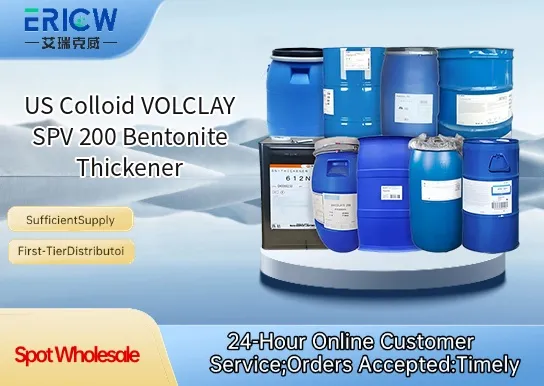
High-yield sodium bentonite with exceptional rheological control in aqueous systems.
Consistent gel strength and thixotropic recovery for reliable suspension performance.
Low-solids formulation enables high thickening efficiency without excessive viscosity buildup.
Optimized particle dispersion for improved compatibility with surfactants and polymers.
USP-grade raw material sourcing ensures batch-to-batch reproducibility and regulatory compliance.
Water-based paints and architectural coatings.
Industrial cleaning formulations and heavy-duty degreasers.
Drilling fluid additives for non-damaging, low-solids mud systems.
Agrochemical suspensions and pesticide concentrates.
Personal care gels and aqueous cosmetic bases.
| Chemical Type | Sodium bentonite clay |
| Product Form | Fine white to light tan free-flowing powder |
| Appearance | Dry, odorless, non-toxic powder |
| Primary Applications | Thickening, suspension, and rheology modification in water-based systems |
| Key Features | High yield value, rapid hydration, excellent thixotropy |
| Benefits | Reduces settling, improves stability, enhances application properties |
| Storage Conditions | Store in cool, dry location; protect from moisture and contamination |
| Regulatory Status | Compliant with FDA 21 CFR §189.120 for indirect food contact applications |
Q1: What is the primary function of VOLCLAY SPV 200 in formulations?
A: VOLCLAY SPV 200 is a sodium-activated bentonite designed to provide rheological control—specifically suspension stabilization, viscosity enhancement, and anti-settling performance—in water-based systems such as coatings, adhesives, sealants, and construction mortars.
Q2: How does VOLCLAY SPV 200 differ from standard bentonite thickeners?
A: VOLCLAY SPV 200 undergoes proprietary purification and activation to deliver improved colloidal dispersion, faster hydration kinetics, and more consistent yield stress development in aqueous media—especially under low-shear conditions or in the presence of moderate electrolyte levels.
Q3: Is VOLCLAY SPV 200 compatible with common biocides and defoamers used in architectural coatings?
A: Yes, VOLCLAY SPV 200 demonstrates broad compatibility with widely used isothiazolinone and formaldehyde-releasing biocides, as well as silicone and mineral oil-based defoamers—though optimal performance should be confirmed during full formulation testing due to system-specific interactions.
Q4: What are the recommended dispersion methods for achieving full activation?
A: For optimal performance, pre-disperse VOLCLAY SPV 200 using high-shear mixing (e.g., rotor-stator or high-speed disperser) into water or a water-rich portion of the formulation. Avoid direct addition to highly viscous or high-electrolyte phases; gradual incorporation with adequate hydration time improves gel development and reduces agglomeration risk.
Contact With Us:
E-mail: wangxingqiang@ericwchem.com
Have a Questions? Call Us:
Add:
Building A1, Jiete Industrial Park, Huangpu District, Guangzhou City, Guangdong Province, China