English
 Español
 tiếng việt
 русский
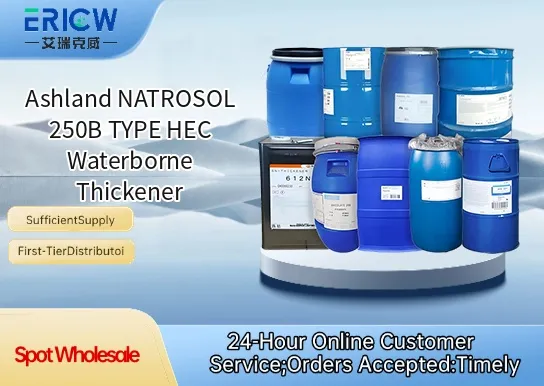
Highly efficient rheology modifier delivering excellent low-shear viscosity (LSV) and sag resistance in waterborne systems.
Provides outstanding compatibility with anionic surfactants, co-binders, and common paint additives.
Offers superior film formation and leveling without compromising scrub resistance or gloss retention.
Non-ionic, cellulose-based thickener with excellent biostability and low foaming characteristics.
Easily dispersible in cold water with rapid hydration and consistent viscosity development.
Architectural interior and exterior latex paints.
Waterborne industrial maintenance coatings.
Low-VOC and zero-VOC decorative coatings.
Water-based primers and sealers.
Textile printing pastes and construction adhesives.
| Chemical Type | Hydroxyethyl cellulose (HEC) |
| Product Form | Free-flowing white to off-white powder |
| Appearance | Free-flowing granular powder |
| Primary Applications | Waterborne architectural and industrial coatings |
| Key Features | Non-ionic, cold-water soluble, high thickening efficiency |
| Benefits | Improved brush/roll application, anti-sag performance, and storage stability |
| pH Range (1% aqueous solution) | 6.0–8.5 |
| Viscosity (1% solution, 25°C, Brookfield RVT, spindle #3, 30 rpm) | 2,200–2,800 mPa·s |
Q1: What is the primary function of NATROSOL 250B in waterborne formulations?
A: NATROSOL 250B is a hydroxyethyl cellulose (HEC) thickener designed to provide efficient rheology control—enhancing viscosity, improving sag resistance, and supporting uniform pigment suspension in water-based paints, coatings, adhesives, and construction mortars.
Q2: How does NATROSOL 250B differ from other HEC grades like 250HHX or 250M?
A: NATROSOL 250B is specifically optimized for balanced performance in architectural and industrial waterborne systems, offering good water solubility, moderate pseudoplasticity, and robust compatibility with common co-thickeners and surfactants—distinguishing it from higher-viscosity (e.g., 250HHX) or low-salt-tolerance (e.g., 250M) variants.
Q3: Is NATROSOL 250B suitable for use in high-shear applications such as roller or spray application?
A: Yes—its rheological profile delivers good high-shear thinning behavior, enabling smooth application with minimal spattering during rolling and consistent atomization in airless spray systems, while maintaining sufficient low-shear viscosity for storage stability.
Q4: How should NATROSOL 250B be incorporated into a formulation to avoid clumping or fisheyes?
A: It is recommended to pre-disperse NATROSOL 250B in a non-aqueous carrier (e.g., glycol or propylene glycol) or add it gradually under high-shear mixing to deionized water containing a pH-adjusted buffer (pH ~6–9), avoiding direct addition to cold, undiluted water or highly ionic media.
Contact With Us:
E-mail: wangxingqiang@ericwchem.com
Have a Questions? Call Us:
Add:
Building A1, Jiete Industrial Park, Huangpu District, Guangzhou City, Guangdong Province, China