English
 Español
 tiếng việt
 русский
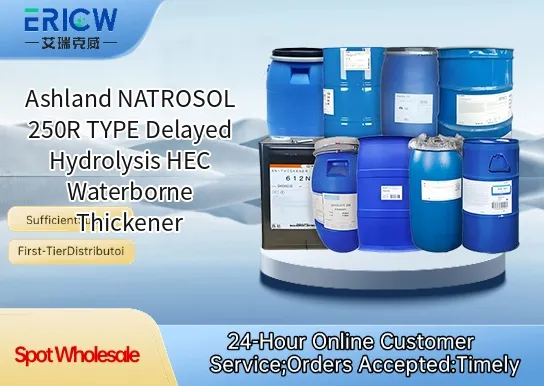
Delayed hydrolysis profile enables controlled viscosity development during storage and processing.
Excellent rheological performance with high pseudoplasticity and strong sag resistance in waterborne formulations.
Enhanced compatibility with common co-thickeners, surfactants, and biocides used in architectural and industrial coatings.
Low foaming characteristics support efficient high-shear mixing and spray application processes.
Improved batch-to-batch consistency due to precise molecular weight control and narrow substitution distribution.
Interior and exterior architectural latex paints.
Waterborne wood stains and clear finishes.
Industrial maintenance coatings for metal and concrete substrates.
Water-based adhesives and construction sealants.
Decorative and functional wall coatings requiring long-term viscosity stability.
| Chemical Type | Hydroxyethyl cellulose (HEC), delayed hydrolysis grade |
| Product Form | Free-flowing white to off-white granular powder |
| Appearance | Free-flowing granules, no visible lumps or discoloration |
| Primary Applications | Waterborne architectural and industrial coatings, adhesives, sealants |
| Key Features | Controlled hydration kinetics, high thickening efficiency, low foam generation |
| Benefits | Improved shelf-life stability, enhanced brush/roller application, reduced settling |
| pH Range (1% aqueous solution) | 6.0–8.5 |
| Viscosity (1% solution, 25°C, Brookfield RVT, spindle #3, 12 rpm) | 2,200–2,800 cP |
Q1: What is the key functional advantage of the delayed hydrolysis technology in NATROSOL 250R TYPE?
A: The delayed hydrolysis design enables gradual viscosity development after addition to waterborne formulations, allowing for improved high-shear mixing efficiency, reduced lumping during incorporation, and enhanced batch-to-batch consistency—particularly beneficial in high-speed manufacturing processes.
Q2: How does NATROSOL 250R TYPE differ from standard HEC thickeners in terms of rheology profile?
A: NATROSOL 250R TYPE delivers a more balanced rheology—providing moderate to high low-shear viscosity for sag resistance and leveling, while maintaining good high-shear thinning for sprayability and brush/roller application. Its delayed activation also contributes to improved storage stability compared to rapidly hydrating HEC grades.
Q3: Is NATROSOL 250R TYPE compatible with common biocides and co-thickeners used in architectural coatings?
A: Yes—it exhibits broad compatibility with isothiazolinone and formaldehyde-releasing biocides, as well as associative thickeners (e.g., HEUR) and non-ionic cellulose ethers. Compatibility testing under actual formulation conditions is recommended due to potential interactions with ionic surfactants or high electrolyte levels.
Q4: What are typical dosage guidelines for NATROSOL 250R TYPE in waterborne paints?
A: It is typically used at low concentrations—generally ranging from 0.1% to 2% by weight of the total formulation—depending on the target viscosity, solids content, and desired balance of application and film properties. Optimal dosage should be determined empirically through lab-scale formulation trials.
Contact With Us:
E-mail: wangxingqiang@ericwchem.com
Have a Questions? Call Us:
Add:
Building A1, Jiete Industrial Park, Huangpu District, Guangzhou City, Guangdong Province, China