English
 Español
 tiếng việt
 русский
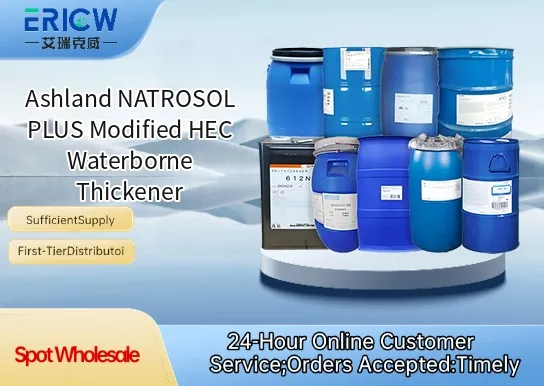
Enhanced rheology control with superior sag resistance in vertical applications.
Improved compatibility with anionic and nonionic surfactants in waterborne systems.
Reduced sensitivity to electrolytes and pH fluctuations compared to standard HEC.
Excellent film formation and low foam generation during high-shear mixing.
Consistent thickening performance across broad temperature ranges (5–40 °C).
Architectural paints and interior/exterior latex coatings.
Water-based wood stains and clear finishes.
Industrial maintenance coatings and protective primers.
Tile grouts and cementitious repair mortars.
Waterborne adhesives and construction sealants.
| Chemical Type | Hydroxyethyl cellulose (HEC), chemically modified |
| Product Form | Free-flowing white to off-white powder |
| Appearance | Odorless, fine granular powder |
| Primary Applications | Waterborne coatings, construction mortars, adhesives |
| Key Features | Rheology modifier, water retention agent, anti-sag additive |
| Benefits | Improved spatter resistance, enhanced brush/roller application, reduced settling |
| pH Range (1% aqueous solution) | 6.0–8.5 |
| Solubility | Readily dispersible in cold water; fully hydrates within 30–60 minutes |
Q1: How does NATROSOL PLUS differ from standard hydroxyethyl cellulose (HEC) thickeners?
A: NATROSOL PLUS is a specially modified HEC designed to deliver enhanced water retention, improved rheological performance, and greater compatibility in challenging waterborne systems—particularly those containing high levels of surfactants, electrolytes, or co-solvents where conventional HEC may show reduced thickening efficiency or stability.
Q2: Is NATROSOL PLUS suitable for low-VOC and zero-VOC architectural coatings?
A: Yes—NATROSOL PLUS is inherently non-ionic and free of volatile organic compounds (VOCs), making it well-suited for formulating low-VOC and zero-VOC interior and exterior paints, where it provides excellent viscosity build, sag resistance, and brush/roller application properties without compromising regulatory compliance.
Q3: What is the recommended addition method for optimal dispersion and performance?
A: For best results, NATROSOL PLUS should be added as a dry powder under high-shear mixing to prevent agglomeration. Pre-dispersing in a water-miscible liquid (e.g., propylene glycol or ethanol) or using a vortex mixer during gradual addition into the aqueous phase helps ensure uniform hydration and full viscosity development.
Q4: Can NATROSOL PLUS be used in combination with associative thickeners?
A: Yes—NATROSOL PLUS is frequently used in hybrid thickener systems alongside HEUR or HASE types to balance cost, rheology profile, and application performance. Its non-ionic nature minimizes incompatibility risks, though formulation-specific compatibility testing is recommended to confirm synergy and stability.
Contact With Us:
E-mail: wangxingqiang@ericwchem.com
Have a Questions? Call Us:
Add:
Building A1, Jiete Industrial Park, Huangpu District, Guangzhou City, Guangdong Province, China