English
 Español
 tiếng việt
 русский
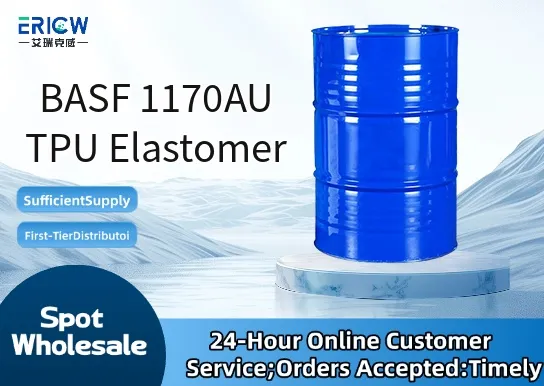
Excellent abrasion resistance for demanding mechanical service life requirements.
Outstanding low-temperature flexibility down to –40 °C.
Good hydrolytic stability, suitable for humid and outdoor environments.
High tensile strength and elongation at break for dynamic part performance.
Readily processable via injection molding and extrusion without pre-drying.
Automotive interior trim components (e.g., gear knobs, armrest covers).
Consumer electronics protective casings and flexible grips.
Industrial hoses and pneumatic tubing requiring oil and weather resistance.
Footwear midsoles and outsoles requiring rebound and durability.
Medical device housings and non-implantable wearable components.
| Chemical Type | Thermoplastic Polyurethane (TPU), aliphatic polyester-based |
| Product Form | Pellets |
| Appearance | Off-white to light beige, free-flowing granules |
| Primary Applications | Injection molded and extruded elastomeric parts |
| Key Features | Abrasion resistance, low-temp flexibility, hydrolysis resistance |
| Processing Method | Injection molding, extrusion, blow molding |
| Density (ISO 1183) | ~1.18 g/cm³ |
| Melt Flow Index (ISO 1133, 210 °C/5 kg) | 10–14 g/10 min |
Q1: What is the primary application area for BASF 1170AU TPU Elastomer?
A: BASF 1170AU is a thermoplastic polyurethane elastomer specifically engineered for extrusion and injection molding of high-performance flexible profiles, tubing, and thin-walled components—commonly used in automotive interior trim, medical device housings, and consumer electronics protective casings where resilience, abrasion resistance, and surface aesthetics are critical.
Q2: How does 1170AU differ from standard aromatic TPU grades in terms of processing behavior?
A: Unlike many conventional aromatic TPUs, 1170AU offers enhanced melt stability and reduced viscosity sensitivity across typical processing temperatures (180–220 °C), enabling smoother extrusion of fine-diameter tubing and more consistent part replication in high-speed injection molding—without requiring extensive drying beyond standard TPU protocols.
Q3: Is BASF 1170AU suitable for applications requiring low-temperature flexibility?
A: Yes—1170AU maintains excellent low-temperature performance with a glass transition temperature (Tg) typically below −30 °C, supporting reliable flexural behavior and impact resistance in cold environments, such as under-hood automotive components or outdoor portable equipment.
Q4: Can 1170AU be overmolded onto common engineering plastics like PP or ABS?
A: 1170AU demonstrates good adhesion to selected polyolefins and styrenics when processed under optimized mold temperature and melt interface conditions; however, compatibility should be verified via prototype trials, as bond strength depends on substrate surface energy, pretreatment, and process parameters—not inherent chemical bonding.
Contact With Us:
E-mail: wangxingqiang@ericwchem.com
Have a Questions? Call Us:
Add:
Building A1, Jiete Industrial Park, Huangpu District, Guangzhou City, Guangdong Province, China