English
 Español
 tiếng việt
 русский
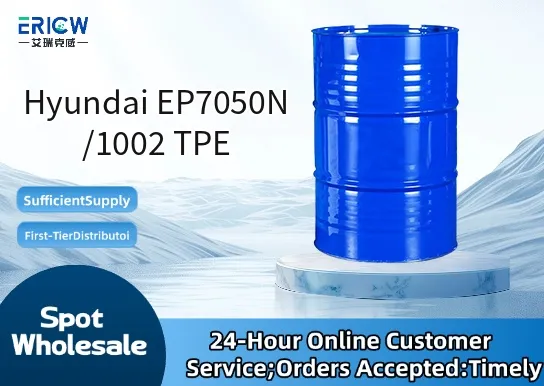
Excellent melt processability for high-speed extrusion and injection molding.
Superior soft-touch feel with balanced hardness (Shore A 50) and elasticity.
Good resistance to UV exposure and thermal aging, supporting outdoor durability.
Low extractables and compliant with FDA 21 CFR §177.2600 for food-contact applications.
Compatible with polypropylene (PP) and polyethylene (PE) substrates for co-extrusion and overmolding.
Soft-grip handles for power tools and consumer appliances.
Sealing profiles and gaskets in automotive interior trim components.
Flexible tubing and medical device housings requiring biocompatibility.
Overmolded grips for kitchenware and personal care products.
Weather-resistant seals and protective covers for outdoor electronics.
| Chemical Type | Thermoplastic Elastomer (TPE) – Styrenic Block Copolymer (SBC) based |
| Product Form | Pellets |
| Appearance | Off-white, translucent granules |
| Hardness (Shore A) | 50 ± 3 |
| Melt Flow Rate (200°C/5 kg) | 25–35 g/10 min |
| Density | 0.91–0.93 g/cm³ |
| Key Features | Soft-touch, low-temperature flexibility, recyclable, halogen-free |
| Primary Applications | Overmolding, extruded profiles, soft-touch components |
Q1: What is the primary polymer base of Hyundai EP7050N/1002 TPE?
A: Hyundai EP7050N/1002 is a thermoplastic elastomer based on a styrenic block copolymer (SBC) architecture, offering a balanced combination of rubber-like elasticity and thermoplastic processability.
Q2: Is this grade suitable for overmolding onto polypropylene (PP) or polyethylene (PE) substrates?
A: Yes — EP7050N/1002 is specifically formulated to provide strong adhesion to common polyolefins such as PP and HDPE when processed under appropriate temperature and pressure conditions, making it well-suited for two-shot molding and soft-touch overmolding applications.
Q3: Does this TPE require drying before processing?
A: Yes — like most SBC-based TPEs, EP7050N/1002 is hygroscopic and should be dried prior to melt processing. A typical recommendation is 2–4 hours at 70–80 °C using a desiccant dryer to ensure optimal surface quality and mechanical performance.
Q4: Can EP7050N/1002 be used in applications requiring skin contact or consumer product compliance?
A: This grade is commonly selected for non-food-contact consumer goods where tactile feel, flexibility, and recyclability are valued. While it contains no intentionally added heavy metals or phthalates, formal regulatory compliance (e.g., for toys or medical devices) must be verified through finished-product testing and formulation review with your regulatory team.
Contact With Us:
E-mail: wangxingqiang@ericwchem.com
Have a Questions? Call Us:
Add:
Building A1, Jiete Industrial Park, Huangpu District, Guangzhou City, Guangdong Province, China