English
 Español
 tiếng việt
 русский
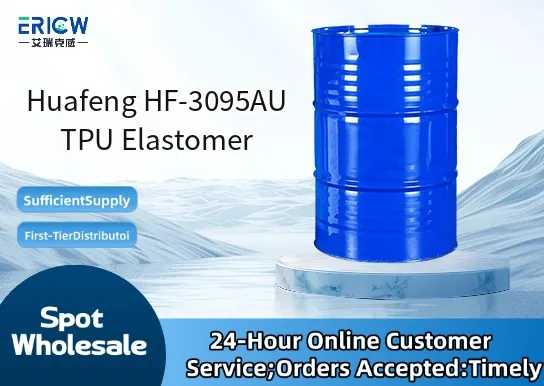
Excellent abrasion resistance for extended service life in demanding mechanical environments.
Outstanding low-temperature flexibility down to –40 °C without significant loss of elasticity.
Good oil and grease resistance, maintaining dimensional stability in contact with hydrocarbon-based fluids.
High tensile strength and elongation at break, enabling robust performance in dynamic applications.
Process-friendly melt viscosity suitable for extrusion, injection molding, and calendering.
Automotive interior trim components including instrument panel skins and door armrests.
Industrial hoses and fluid-conveying tubing requiring flexibility and chemical resilience.
Footwear midsoles and outsoles demanding rebound, wear resistance, and comfort.
Conveyor belts and drive belts where high load-bearing capacity and fatigue resistance are critical.
Medical tubing and non-implantable device housings meeting ISO 10993-5 biocompatibility screening requirements.
| Chemical Type | Aliphatic polyester-based thermoplastic polyurethane |
| Product Form | Pellets (free-flowing, uniform size) |
| Appearance | Translucent amber granules |
| Shore A Hardness | 95 ± 2 |
| Tensile Strength (ASTM D412) | ≥ 42 MPa |
| Elongation at Break (ASTM D412) | ≥ 500 % |
| Melt Flow Index (2.16 kg, 200 °C, ASTM D1238) | 12–16 g/10 min |
| Specific Gravity (ASTM D792) | 1.18–1.20 |
Q1: What are the key processing advantages of HF-3095AU compared to conventional TPU grades?
A: HF-3095AU offers enhanced melt flow stability and reduced viscosity sensitivity during extrusion and injection molding, enabling smoother processing at lower shear rates and improved surface finish in thin-walled or complex geometries.
Q2: Is HF-3095AU suitable for applications requiring good low-temperature flexibility and abrasion resistance?
A: Yes — as a thermoplastic polyurethane elastomer with aliphatic isocyanate chemistry, HF-3095AU delivers balanced low-temperature toughness and excellent resistance to mechanical wear, making it well-suited for dynamic components such as seals, rollers, and protective overmolds.
Q3: Can HF-3095AU be co-extruded or overmolded with common engineering plastics like PC, ABS, or PP?
A: HF-3095AU demonstrates good interfacial adhesion with several polar engineering thermoplastics including PC and ABS under optimized processing conditions; compatibility with non-polar substrates like PP typically requires surface pretreatment or use of tie-layer formulations.
Q4: How does HF-3095AU perform in terms of UV stability and long-term color retention?
A: Due to its aliphatic backbone and absence of aromatic moieties, HF-3095AU exhibits inherently superior UV resistance and minimal yellowing during outdoor exposure compared to aromatic TPUs, supporting durable applications in translucent or light-colored end products.
Contact With Us:
E-mail: wangxingqiang@ericwchem.com
Have a Questions? Call Us:
Add:
Building A1, Jiete Industrial Park, Huangpu District, Guangzhou City, Guangdong Province, China