English
 Español
 tiếng việt
 русский
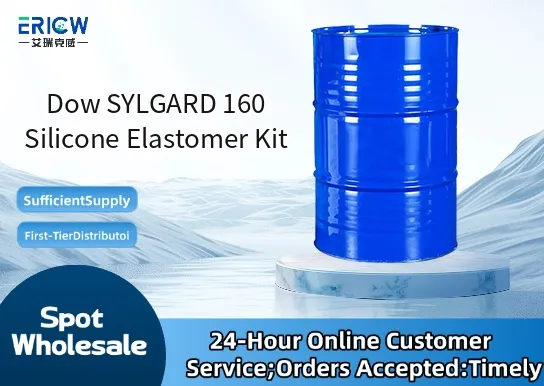
Two-part, platinum-catalyzed silicone elastomer system offering excellent flexibility and low compression set.
Room-temperature curing with adjustable pot life and rapid demold time for efficient prototyping and production.
Exceptional transparency and optical clarity suitable for light-transmissive applications.
Biocompatibility tested per ISO 10993-5 and USP Class VI, supporting medical device and healthcare uses.
Outstanding thermal stability across –60 °C to +200 °C with minimal property drift over time.
Medical device encapsulation and soft-touch overmolding for wearable sensors and diagnostic equipment.
Prototyping of flexible microfluidic devices and lab-on-a-chip components.
Optical bonding and lens encapsulation in LED lighting and display assemblies.
Soft robotics actuator fabrication requiring high elongation and reversible deformation.
Electrical insulation and environmental protection for sensitive electronic components and connectors.
| Chemical Type | Platinum-catalyzed addition-cure silicone elastomer |
| Product Form | Two-component liquid kit (Part A: base; Part B: catalyst) |
| Appearance | Clear, low-viscosity liquids (Part A: water-white; Part B: pale yellow) |
| Mix Ratio by Weight | 10:1 (Part A : Part B) |
| Cure Temperature Range | Room temperature (23 °C) or elevated (60–100 °C for accelerated cure) |
| Shore A Hardness (ASTM D2240) | 60 ± 5 |
| Tensile Strength (ASTM D412) | 8.5 MPa typical |
| Elongation at Break (ASTM D412) | 170% typical |
Q1: What is the typical mixing ratio of Part A to Part B?
A: Dow SYLGARD 160 is supplied as a two-component platinum-catalyzed silicone elastomer system, with Part A (base) and Part B (catalyst) designed for precise 10:1 by weight mixing. Accurate weighing and thorough mixing are essential to ensure complete cure and optimal mechanical performance.
Q2: How does cure time vary with temperature?
A: Cure time is highly temperature-dependent: at room temperature (23 °C), the material remains workable for several hours before gelling, while full physical properties develop over days. Elevated temperatures (e.g., 60–100 °C) significantly accelerate cure—typically achieving handling strength in minutes and full cure within 1–2 hours—without compromising thermal or electrical stability.
Q3: Is SYLGARD 160 suitable for encapsulation of sensitive electronic components?
A: Yes—SYLGARD 160 is widely used for low-stress encapsulation and potting of microelectronics, sensors, and optoelectronic devices due to its ultra-low modulus, excellent dielectric properties, minimal exotherm during cure, and ability to conform to fine geometries without inducing mechanical stress on delicate structures.
Q4: Can SYLGARD 160 be post-cured, and what effect does that have?
A: Post-curing is optional but recommended for applications requiring maximum thermal stability, reduced residual volatiles, or enhanced long-term mechanical consistency. A typical post-cure involves heating at 60–100 °C for 1–2 hours after initial room-temperature cure, which helps drive off trace condensation by-products and improves crosslink density.
Contact With Us:
E-mail: wangxingqiang@ericwchem.com
Have a Questions? Call Us:
Add:
Building A1, Jiete Industrial Park, Huangpu District, Guangzhou City, Guangdong Province, China