English
 Español
 tiếng việt
 русский
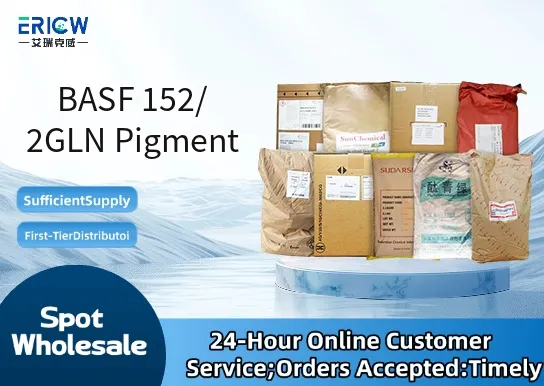
High chroma and excellent lightfastness for long-term color stability.
Outstanding thermal stability suitable for high-temperature processing up to 280 °C.
Good dispersibility in both polar and non-polar polymer matrices.
Low migration tendency, ensuring color integrity in food-contact and medical-grade applications.
Compliant with major global regulatory frameworks including EU REACH and US FDA 21 CFR §178.3297.
Engineering plastics for automotive interior components.
Food packaging films requiring FDA-compliant colorants.
Medical tubing and disposable devices requiring biocompatibility and sterilization resistance.
High-performance wire & cable jacketing materials.
Electronics housings requiring UV-stable, non-blooming pigmentation.
| Chemical Type | Condensed Azo Pigment |
| Product Form | Free-flowing powder |
| Appearance | Reddish-orange fine powder |
| Primary Applications | Polyolefins, polyesters, polycarbonates, thermoplastic elastomers |
| Key Features | Heat stable, low volatility, non-bleeding |
| Benefits | Consistent batch-to-batch color match, minimal filter clogging in extrusion |
| Regulatory Status | EU REACH registered; compliant with FDA 21 CFR §178.3297 for indirect food contact |
| Recommended Processing Temperature Range | 200–280 °C |
Q1: What is the primary chemical nature of BASF 152/ 2GLN Pigment?
A: BASF 152/ 2GLN is an organic pigment dispersion formulated for high-performance applications, based on a high-purity azo-type chromophore system. It is supplied as a stable aqueous dispersion with proprietary polymeric dispersants to ensure compatibility and long-term colloidal stability.
Q2: Is this pigment suitable for food-contact or pharmaceutical packaging inks?
A: BASF 152/ 2GLN is not pre-qualified for direct food-contact applications. Its suitability for regulated end uses depends on full formulation evaluation—including binder system, processing conditions, and final migration behavior—and must be confirmed through application-specific testing and regulatory review by the end-user.
Q3: How should BASF 152/ 2GLN be incorporated into water-based ink or coating systems?
A: The pigment dispersion is designed for direct addition to aqueous systems. It should be introduced under moderate agitation, followed by homogenization to ensure uniform distribution. Pre-dilution with compatible water or co-solvent may be used to aid incorporation, especially in high-viscosity formulations.
Q4: What are the key handling and storage recommendations?
A: Store in original sealed containers at temperatures between 5 °C and 30 °C, away from freezing and prolonged exposure to direct sunlight. Avoid contamination during handling, and ensure equipment is clean and free of incompatible residues prior to use.
Contact With Us:
E-mail: wangxingqiang@ericwchem.com
Have a Questions? Call Us:
Add:
Building A1, Jiete Industrial Park, Huangpu District, Guangzhou City, Guangdong Province, China