English
 Español
 tiếng việt
 русский
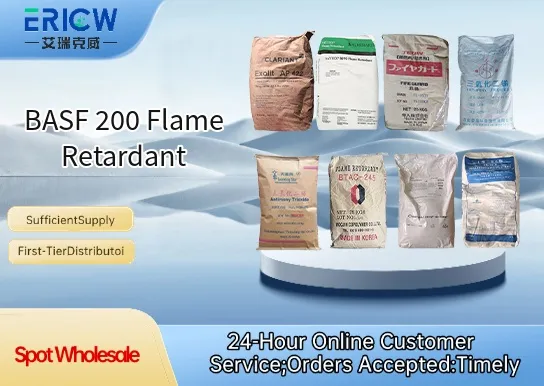
Halogen-free formulation for reduced smoke and toxic gas emissions during combustion.
Excellent thermal stability, maintaining performance up to 300 °C in polymer processing.
Good compatibility with polyolefins, engineering thermoplastics, and elastomers.
Low volatility and minimal migration, ensuring long-term flame-retardant efficacy.
UL 94 V-0 rated at 1.6 mm thickness in standard test configurations.
Wire and cable insulation for low-smoke, zero-halogen (LSZH) applications.
Automotive interior components including dashboards, door trims, and seating foams.
Electrical enclosures and housings for consumer electronics and industrial equipment.
Building and construction materials such as rigid PVC profiles and thermoplastic composites.
3D printing filaments requiring certified fire safety compliance (e.g., EN 45545-2).
| Chemical Type | Phosphorus-based intumescent flame retardant |
| Product Form | Fine white powder |
| Appearance | Free-flowing, odorless granular powder |
| Density (23 °C) | 1.75–1.85 g/cm³ |
| Moisture Content | ≤ 0.5 wt% (by Karl Fischer titration) |
| Thermal Decomposition Onset | ≥ 270 °C (TGA, 10 °C/min, N₂) |
| pH (1% aqueous suspension) | 6.0–7.5 |
| Primary Applications | Polyolefins, PVC, TPU, and thermoset resins |
Q1: What type of flame retardant chemistry does BASF 200 belong to?
A: BASF 200 is an organophosphorus-based flame retardant designed for use in thermoplastic polymers. It functions primarily through condensed-phase mechanisms, promoting char formation and reducing flammable volatiles during thermal decomposition.
Q2: In which polymer systems is BASF 200 typically used?
A: BASF 200 is commonly incorporated into engineering thermoplastics such as polyamide (PA6, PA66), polybutylene terephthalate (PBT), and polycarbonate blends. It is especially suited for halogen-free flame-retardant formulations requiring good mechanical property retention.
Q3: How is BASF 200 incorporated into polymer compounds?
A: BASF 200 is typically added during compounding via twin-screw extrusion. It exhibits good thermal stability up to processing temperatures common for engineering plastics and demonstrates favorable dispersion characteristics without significant plate-out or degradation under standard melt-processing conditions.
Q4: Does BASF 200 affect the electrical properties of flame-retarded compounds?
A: BASF 200 maintains good electrical insulation performance in finished compounds, making it suitable for applications where dielectric strength and comparative tracking index (CTI) are important—such as electronic housings and connectors.
Q5: What are key handling and storage recommendations for BASF 200?
A: Store BASF 200 in a cool, dry place in its original sealed packaging to prevent moisture uptake. Avoid prolonged exposure to high humidity or elevated temperatures prior to processing. Standard industrial hygiene practices should be followed during handling to minimize dust inhalation.
Contact With Us:
E-mail: wangxingqiang@ericwchem.com
Have a Questions? Call Us:
Add:
Building A1, Jiete Industrial Park, Huangpu District, Guangzhou City, Guangdong Province, China