English
 Español
 tiếng việt
 русский
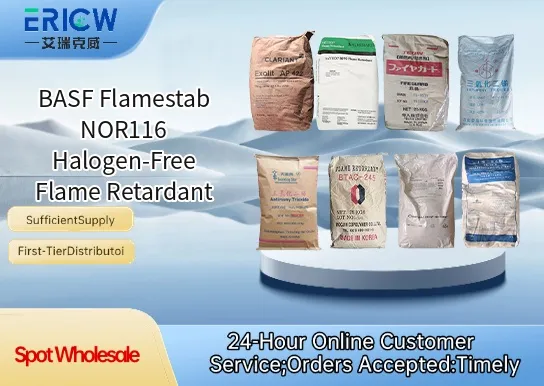
Phosphorus-based, halogen-free formulation ensuring compliance with RoHS, REACH, and other global environmental regulations.
Excellent thermal stability up to 300 °C, enabling compatibility with high-processing-temperature polymers such as polyamide and PBT.
Low volatility and minimal plate-out, supporting long-term processing stability and consistent part quality in extrusion and injection molding.
Good compatibility with engineering thermoplastics, including polyolefins, polyesters, and polyamides, without compromising mechanical properties.
Enables UL 94 V-0 rating at low to medium loading levels (typically 15–25 wt% depending on polymer matrix and thickness).
Electrical and electronic housings (e.g., connectors, circuit breakers, switchgear components).
Automotive interior parts requiring flame retardancy and low smoke density (e.g., dashboard components, trim, junction boxes).
Wire and cable jacketing for building wiring and data communication applications.
Consumer appliance housings (e.g., power tools, kitchen appliances, HVAC controls).
3D-printed functional prototypes and end-use parts where halogen-free certification is mandatory.
| Chemical Type | Organophosphorus compound (phosphinate-based) |
| Product Form | Free-flowing white to off-white granules |
| Appearance | Granular, uniform particle size distribution |
| Density (23 °C) | ~1.45 g/cm³ |
| Melting Range | 270–290 °C (DSC, heating rate 10 K/min) |
| Thermal Decomposition Onset (TGA, N₂, 10 K/min) | ≥280 °C |
| Moisture Content (KF titration) | <0.2 wt% |
| Primary Applications | Halogen-free flame retardancy in engineering thermoplastics |
Q1: What types of polymers is Flamestab NOR116 compatible with?
A: Flamestab NOR116 is primarily designed for use in engineering thermoplastics such as polyamide (PA6, PA66), polybutylene terephthalate (PBT), and polyethylene terephthalate (PET), where halogen-free flame retardancy and good thermal stability are required.
Q2: How does Flamestab NOR116 achieve flame retardancy without halogens?
A: It functions through an intumescent mechanism—promoting the formation of a protective, carbon-rich char layer upon exposure to heat or flame, which insulates the underlying polymer and reduces fuel release and heat feedback.
Q3: Does Flamestab NOR116 affect mechanical properties or processing behavior?
A: When properly compounded, it generally maintains good balance between flame performance and mechanical integrity. It exhibits favorable melt flow characteristics and low volatility, supporting stable extrusion and injection molding processes without significant degradation or plate-out issues.
Q4: What is the typical dosage range for effective flame retardancy?
A: Effective loading typically ranges from 0.1% to 2% by weight, depending on the base polymer, desired fire performance level (e.g., UL 94 V-0), and presence of synergists or fillers. Optimization is recommended via lab-scale compounding trials.
Q5: Is Flamestab NOR116 suitable for applications requiring regulatory compliance for food contact or electronics?
A: Flamestab NOR116 is formulated to support compliance with key industry expectations for halogen-free systems, including RoHS and REACH. However, final regulatory acceptance depends on full formulation, processing conditions, and end-use requirements—validation testing is advised for specific applications.
Contact With Us:
E-mail: wangxingqiang@ericwchem.com
Have a Questions? Call Us:
Add:
Building A1, Jiete Industrial Park, Huangpu District, Guangzhou City, Guangdong Province, China