English
 Español
 tiếng việt
 русский
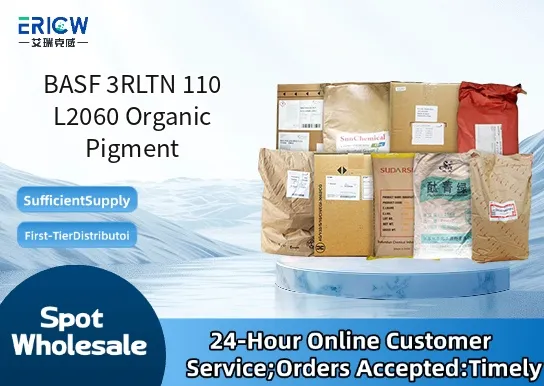
High chroma and excellent red shade purity for vibrant, consistent coloration.
Outstanding thermal stability suitable for high-temperature processing up to 280 °C.
Good lightfastness and weather resistance in demanding outdoor applications.
Excellent dispersibility in both polar and non-polar polymer matrices.
Low volatility and negligible migration in PVC, polyolefins, and engineering plastics.
PVC profiles and window frames requiring long-term color retention.
Polyolefin fibers and injection-molded automotive interior parts.
Engineering plastics including ABS and polycarbonate for consumer electronics housings.
Masterbatch formulations for food-contact-compliant packaging films.
Coating systems for architectural and industrial metal finishes.
| Chemical Type | Quinacridone derivative |
| Product Form | Free-flowing powder |
| Appearance | Red-violet free-flowing powder |
| Primary Applications | PVC, polyolefins, engineering plastics, coatings |
| Key Features | Thermal stability, low migration, high tinctorial strength |
| Benefits | Consistent batch-to-batch color, minimal filter clogging, high processing safety |
| Regulatory Compliance | EU REACH registered; compliant with FDA 21 CFR §178.3297 for polymer additives |
| Particle Size (D50) | Approx. 0.15–0.25 µm (by laser diffraction) |
Q1: What is the primary chemical class and structural characteristic of BASF 3RLTN 110 L2060?
A: BASF 3RLTN 110 L2060 is a high-performance quinacridone-based organic pigment, characterized by its fused polycyclic structure that delivers exceptional lightfastness, weather resistance, and thermal stability.
Q2: In which polymer systems is this pigment typically processed, and what are key processing considerations?
A: It is widely used in engineering thermoplastics such as polyolefins, polyesters, and polycarbonates. Due to its high thermal stability, it withstands typical melt-processing temperatures; however, optimal dispersion requires appropriate compounding equipment and shear-sensitive masterbatch formulation to preserve color strength and hue integrity.
Q3: Is BASF 3RLTN 110 L2060 suitable for applications requiring regulatory compliance in food-contact or toy materials?
A: This pigment is not pre-qualified for direct food-contact or toy safety regulations; its suitability depends on final formulation, migration behavior, and end-use conditions. Customers must conduct full regulatory assessment—including extractables testing and compliance verification—within their specific application matrix and jurisdiction.
Q4: How does the pigment perform under outdoor exposure, and what contributes to its durability?
A: It exhibits outstanding resistance to UV radiation, moisture, and atmospheric pollutants, making it well-suited for demanding exterior applications. Its durability stems from the inherent photochemical stability of the quinacridone backbone and optimized particle size distribution achieved during controlled synthesis and post-treatment.
Q5: What is the typical dosage range when formulating colored plastics with this pigment?
A: Dosage depends on the desired shade depth, polymer type, and processing method, but it is generally used at low concentrations—typically ranging from 0.1% to 2% by weight in the final compound—to achieve strong chroma and excellent opacity without compromising mechanical properties.
Contact With Us:
E-mail: wangxingqiang@ericwchem.com
Have a Questions? Call Us:
Add:
Building A1, Jiete Industrial Park, Huangpu District, Guangzhou City, Guangdong Province, China